In 2025, 68.7% of the transit cargo through the Port of Mombasa was bound for Uganda, according to the Northern Corridor Transit and Transport Coordination Authority (NCTTCA) Transport Observatory Report, 21st edition, which draws on Kenya Ports Authority (KPA) data. We checked that figure against the report on 23 Nov 2026.
The share is measured in tonnes of all cargo, not vehicles, so it can't tell you anything about cars on its own.
Still, if you're buying a car from Japan, it's worth a minute: Uganda is landlocked, so your car lands at a coast port first and finishes the journey by road.
Quick Answer
- Uganda took 68.7% of Mombasa's transit cargo in 2025, ahead of the DRC (11.5%) and South Sudan (10%), according to the NCTTCA Transport Observatory Report, 21st edition.
- The shares are by tonnage of all cargo, not vehicles.
- Uganda is landlocked, so imports land at a coast port first and continue inland.
- The steps for buying from Japan are set out in this buying guide for importing from Japan.
What does the 2025 report say?
The report puts Uganda first among the countries that receive transit cargo through Mombasa, by a wide margin. "Transit cargo" means goods that land at the port but are bound for another country. The NCTTCA Transport Observatory Report, 21st edition, gives Uganda 68.7% of that cargo in 2025, with the DRC and South Sudan a long way behind.
| Destination country |
Share of Mombasa transit cargo, 2025 |
| Uganda |
68.7% |
| Democratic Republic of the Congo (DRC) |
11.5% |
| South Sudan |
10% |
Source: NCTTCA Transport Observatory Report, 21st edition (2025), executive summary, using KPA data. Other destinations not shown.
The three shares add up to 90.2%. The remaining share isn't named in the figures we cite.
You can read the full report on the NCTTCA website.
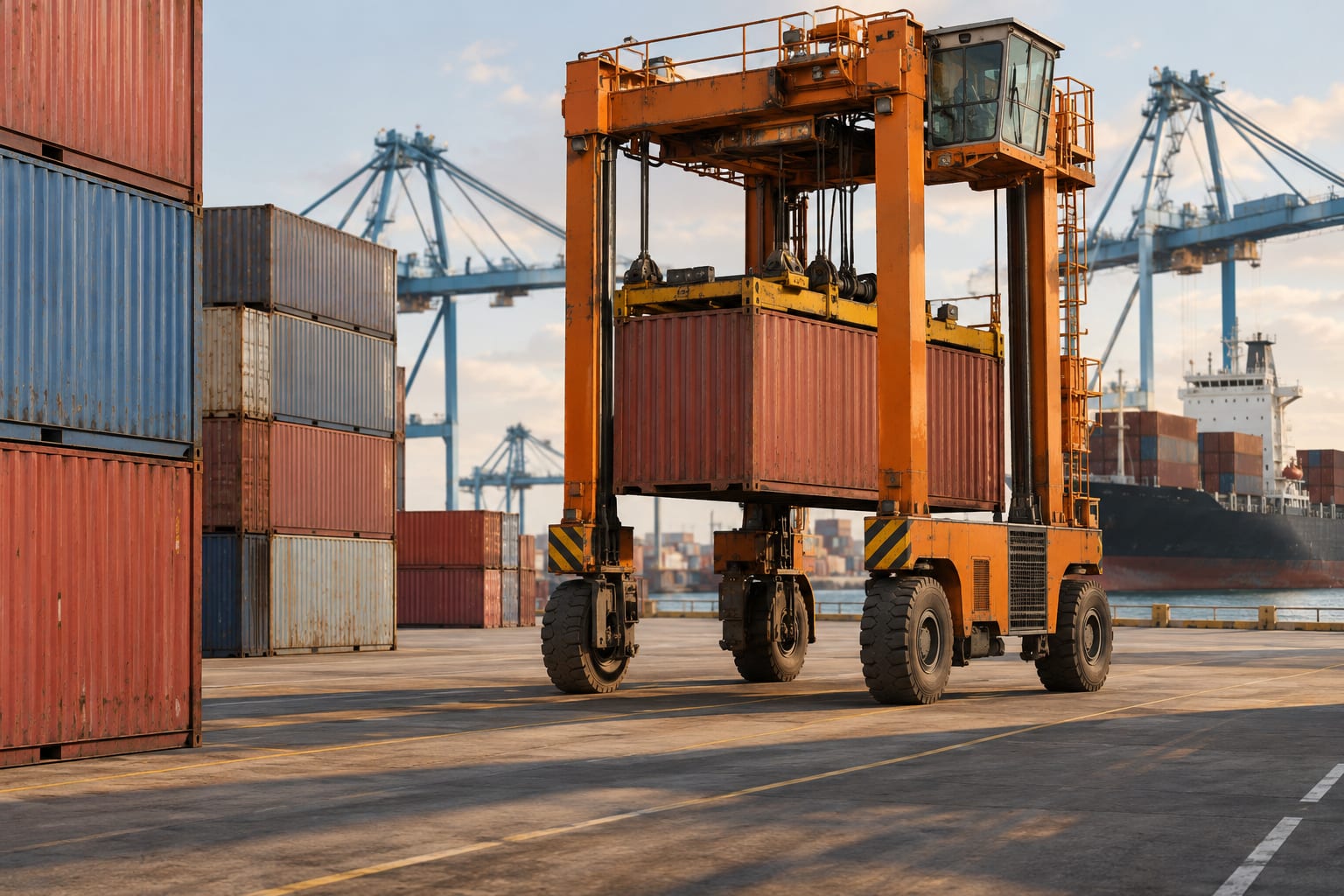 Illustration: A straddle carrier handles a shipping container at a port terminal.
Why does Uganda sit at the top?
Uganda has no coastline. Nearly everything the country imports by sea has to land at a port in a neighbouring country and then travel inland by road or rail. Mombasa is one of the main seaports serving the region, and Dar es Salaam is another route that Ugandan cargo can take.
What does it mean if you're buying a car from Japan?
For a Ugandan buyer, the figure is useful context rather than a promise. It shows that the port-then-road route through Mombasa is a heavily used one for goods bound for Uganda.
What the figure tells you
A car bought at auction in Japan is loaded onto a ship and sailed to a coast port in East Africa. From there it goes by road into Uganda. The NCTTCA report shows that cargo bound for Uganda makes up the largest share of transit traffic through Mombasa. Your car joins a flow that the port, the clearing agents and the transport companies handle every day.
What the figure doesn't tell you
The figures we cite don't say how many cars came through Mombasa, how quickly they cleared, or what the journey cost.
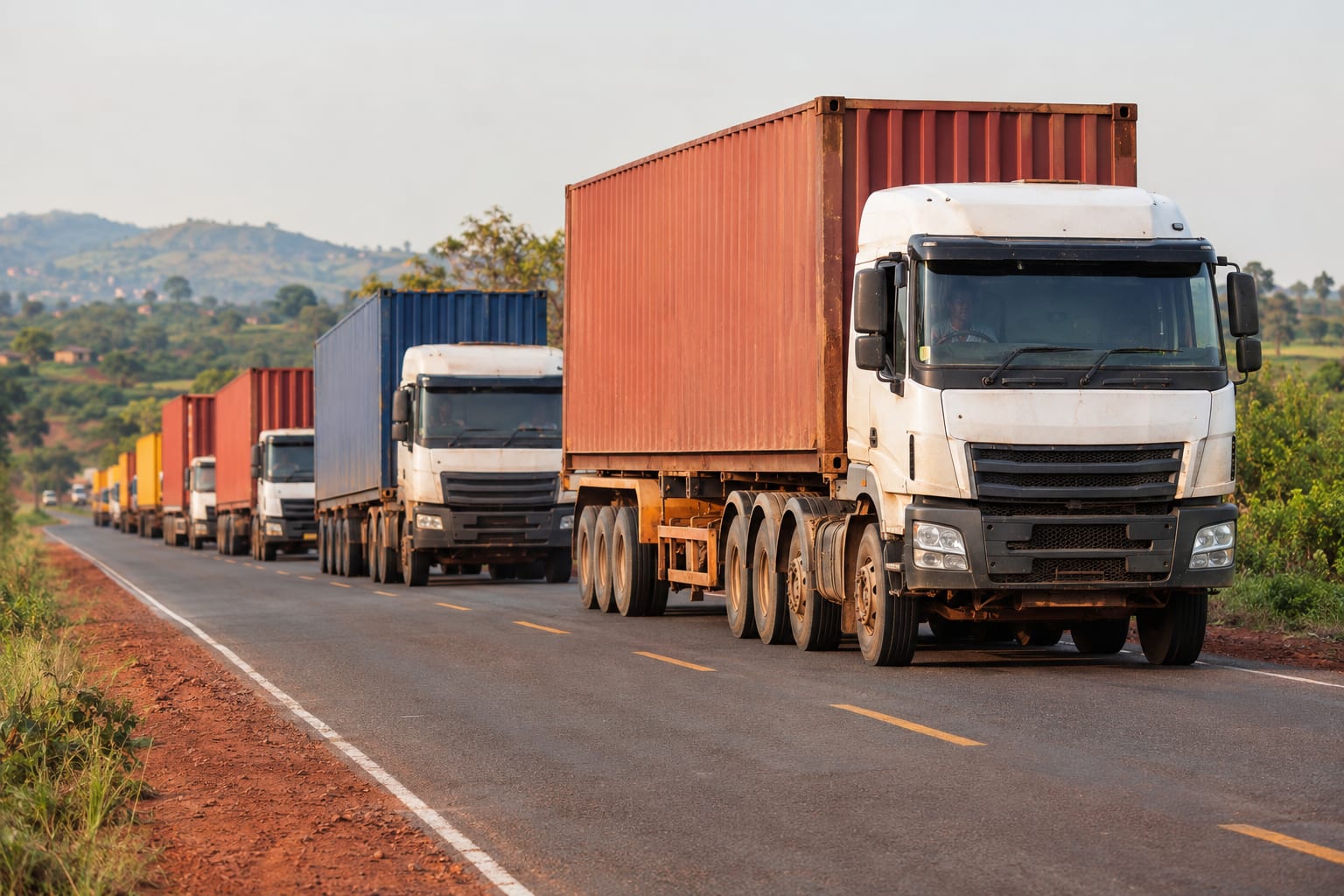 Illustration: A convoy of container trucks travels along a rural highway.
Where does Carbarn fit in?
Carbarn Uganda sells reconditioned Japanese cars direct from Japan to Ugandan buyers. Each vehicle is shipped by roll-on, roll-off (RoRo) vessel to Mombasa or Dar es Salaam, and then travels by road to Uganda, because the country has no port of its own.
The process runs in five stages: choose your car, place your order, make payment, inspection and shipping, then track your shipment from your dashboard. The five-step buying guide walks through each one. If you'd like to understand the route before you commit, that page is the place to start.
What this does not show
The 68.7% share is measured in tonnes of all transit cargo through Mombasa in 2025. It is not a count of vehicles, and we didn't find a separate car figure in the report's executive summary.
The figures we cite don't say how many cars came through the port, how long they took to clear, or what the journey cost. They also don't name the destinations that make up the remaining 9.8% after Uganda, the DRC and South Sudan.
The explanation that Uganda sits at the top because it is landlocked is our reading, not the report's. And the report covers Mombasa only, so it says nothing about cargo routed through Dar es Salaam.
Method and sources
- NCTTCA Transport Observatory Report, 21st edition, executive summary, using Kenya Ports Authority (KPA) data for calendar year 2025. Source of the 68.7%, 11.5% and 10% shares. Checked against the published report on 23 Nov 2026.
- Carbarn Uganda how-to-buy guide. Source of the five buying steps and the two shipping destinations, Mombasa and Dar es Salaam, as set out on that page at the time of writing.
- The 90.2% and 9.8% figures are our own arithmetic from the three published shares.