

Is the Subaru XV Uganda's Best Compact Crossover?
Read Our Blogs today and Learn More

You know the drive. Smooth tarmac out of Kampala, then the turn-off, and suddenly the surface is red murram with ruts deep enough to make you slow to walking pace. Then the wet season arrives and that same stretch turns into something else entirely.
Most compact crossovers on Kampala streets were not built for that second half of the journey. The Honda Vezel and Toyota C-HR are everywhere, and for good reason: they look sharp, they sip fuel, and they are easy to live with in town. The Subaru XV is less common, and it draws a specific question from buyers who have heard about it. Is it genuinely better on rough roads, or is that just Subaru talk?
This guide goes through what the XV actually offers, what the numbers mean once you leave the tarmac, how it stacks up against the two rivals you are probably also considering, and, just as importantly, who should not buy one. The honest answer to the title is not a simple yes.
The Bottom Line
- The XV carries 220 mm of ground clearance across the 2017 to 2022 second generation (CarExpert AU spec data, cross-checked by Zigwheels Malaysia), the most of any mainstream compact crossover at this money, and every 4WD variant runs full-time Symmetrical all-wheel drive.
- The 2019 and later e-BOXER hybrid returns 19.2 km/L on Japan's JC08 cycle and 15.0 km/L on the stricter WLTC cycle, per Subaru's own Japan launch figures reported by Philkotse in 2018.
- Its rivals are front-wheel drive in Japan spec and sit lower. Fine for Kampala. Limited once the tarmac ends.
- The trade-offs are real: Subaru's workshop network here is thinner than Toyota's, and the Lineartronic CVT needs its fluid changed on schedule with the correct Subaru fluid.
- Best for: regular upcountry drivers on mixed surfaces. Not for: pure city commuters chasing the lowest possible fuel bill.
What Makes a Compact Crossover Work on Ugandan Roads?
Uganda has roughly 159,623 km of road, of which only about 6,306 km was paved as of June 2024, according to Ministry of Works and Transport figures reported by allAfrica in March 2026. That is close to 4%. Whatever you drive here spends most of its life on something other than tarmac.
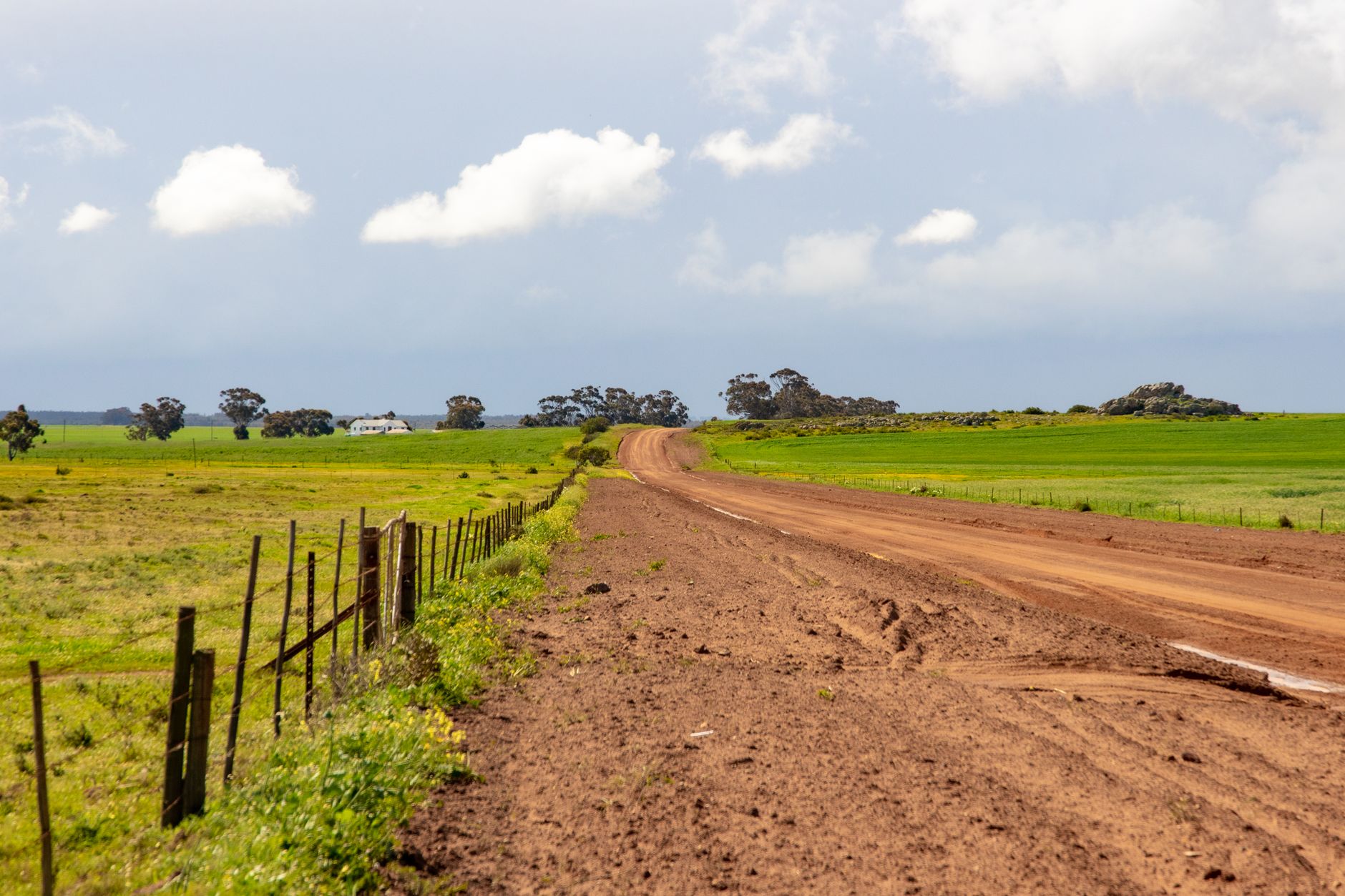 An unpaved road winds through green rural farmland.
That figure explains the two-world problem every Ugandan buyer faces. Your weekday driving is urban tarmac with potholes and sharp speed bumps. Your weekend or family driving is murram, gravel, or a graded track that washes out every rainy season. A car that is excellent at one can be genuinely poor at the other.
Three specifications decide whether a compact crossover copes with both.
Ground clearance is the gap between the lowest hard point under the car and the road. It decides whether you clear a rutted centre ridge, a steep drain crossing, or a badly built hump without hearing that scrape.
Drivetrain is the next one. Front-wheel drive is perfectly adequate on sealed surfaces. On wet murram or loose gravel on a slope, the difference between two driven wheels and four is not subtle.
Suspension tuning is the quiet third factor. Some crossovers are sprung firm for tidy handling on smooth European roads. Others are calibrated to soak up uneven ground without crashing through their travel. With those three in mind, here is what the XV brings.
What Does the Subaru XV Actually Give You?
The Subaru XV sits in an unusual spot. It is a compact crossover, roughly the footprint of a hatchback, that was engineered around capability first and economy second. Japan-market listings for Uganda run from 2015 to 2021 across petrol and hybrid drivetrains, in the 30M to 45M UGX bracket, which puts it in direct competition with cars built to a very different brief.
 2019 Subaru XV Hybrid (e-BOXER)
Ground Clearance and Symmetrical AWD: The Core Case
The 220 mm clearance figure holds across the whole second-generation XV, petrol and hybrid alike, per CarExpert AU's 2021 XV specification data and confirmed separately by Zigwheels Malaysia. For context, that is more than many body-on-frame pickups offer once loaded. On a sealed road you will never notice it. On a rough murram track or a flooded dip on the Mbarara road, you will.
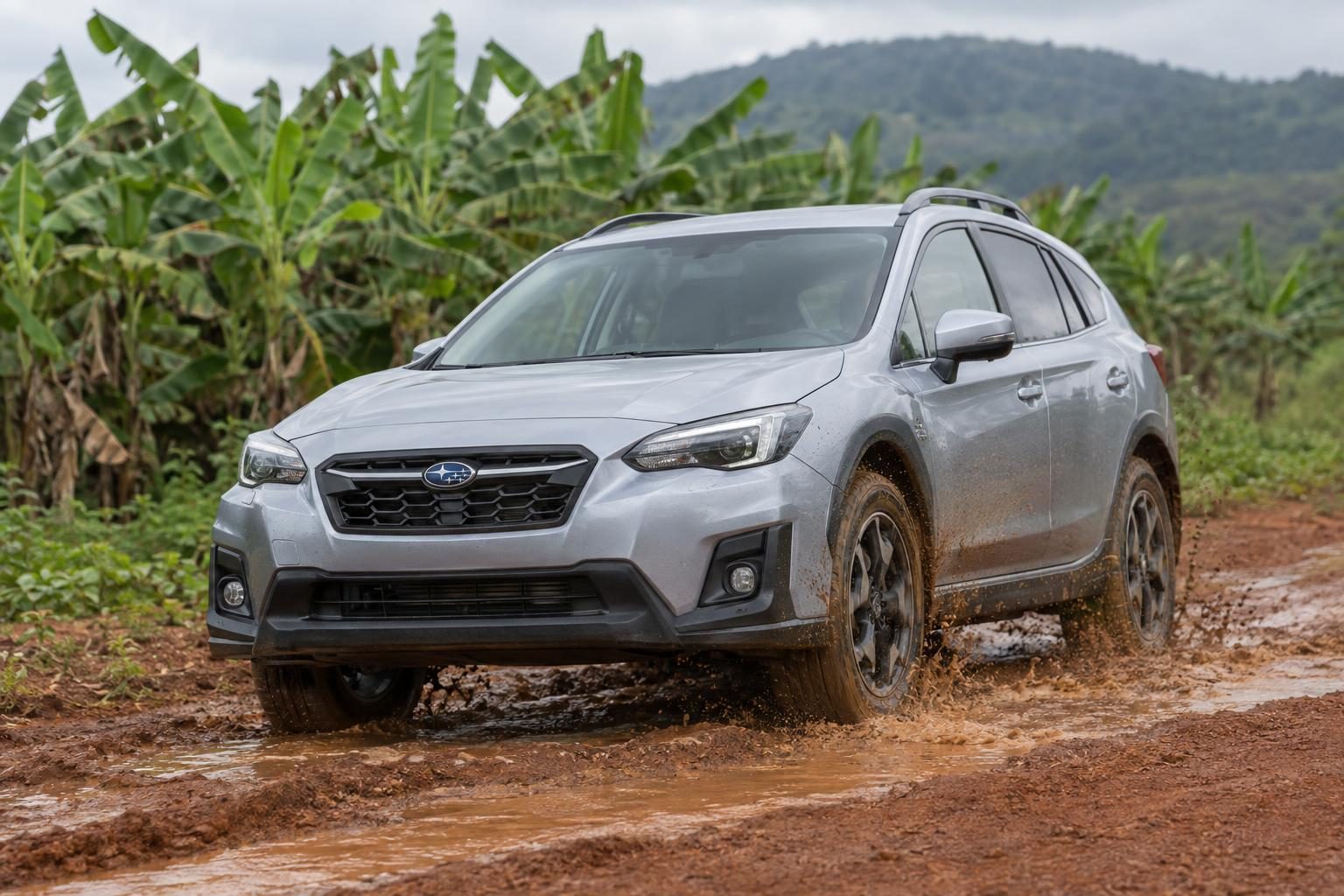 A silver Subaru XV splashes through a muddy rural track.
Symmetrical AWD is worth explaining properly, because it is not the same thing as the AWD badge on most crossovers. Subaru's system drives all four wheels continuously, from the moment you start the engine. It never waits for anything. Most FWD-based crossovers use an on-demand system instead: the car runs as front-wheel drive, and a clutch pack sends torque rearward only after sensors detect the front wheels already slipping. On tarmac that delay is invisible. On a greasy murram slope, the fraction of a second you spend spinning before the rear axle wakes up is exactly the moment you lose momentum.
The boxer engine is the reason Subaru can do this so tidily. A horizontally opposed four-cylinder lies flat rather than standing upright, which lets the whole drivetrain sit low and centred along the car. Every XV listing confirms the layout: engine configuration listed as horizontally opposed 4 cylinder, DOHC, 16 valves. The practical effect is a lower centre of gravity and a car that feels planted when one wheel drops into a rut.
Now the honest part. Permanent AWD does not improve fuel economy, it adds driveline friction and mechanical parts, and it makes the car marginally more expensive to keep. If 95% of your kilometres are Kampala tarmac, you are carrying that hardware for nothing.
Engine Options: Petrol FB20 Versus e-BOXER Hybrid
Two drivetrains dominate the XV range reaching Uganda, and the difference between them matters more than the year on the logbook.
 2019 Subaru XV
The 2.0i petrol (2017 variants). Engine code FB20, 2,000 cc, compression ratio 12.5, rated at 154 hp, paired with a Lineartronic CVT automatic and 4WD. Body dimensions are 4,465 mm long, 1,800 mm wide, 1,550 mm tall on a 2,670 mm wheelbase, with five seats. It is the simpler, cheaper way into the XV and it is mechanically well understood by most competent workshops. On fuel, no verified Japan-market JC08 figure for this exact 2.0-litre variant could be confirmed, so treat owner reports of roughly 11 to 14 km/L in mixed Ugandan driving as indicative only, not as a lab number.
The e-BOXER hybrid (2019 and 2021 variants). Same FB20 block and the same 12.5 compression ratio, now paired with a 13.6 PS electric motor producing 65 Nm, giving 145 hp from the FB20 petrol engine, supplemented by the 13.6 PS electric motor (auto-data.net powertrain data, 2020). Fuel economy is 19.2 km/L on JC08 and 15.0 km/L on WLTC, from Subaru's Japan launch material as reported by Philkotse in 2018. Use the WLTC number for planning, since it is the stricter of the two cycles and closer to how people actually drive.
Note what the e-BOXER is not. It is not a plug-in and it does not run far on electricity alone. The battery is charged by regenerative braking. What it gives you is instant low-speed torque, which is genuinely useful when you are creeping through a waterlogged track and do not want to lean on the CVT.
The older 2016 XV Hybrid is a different car. Its listing shows a compression ratio of 10.8 and 150 hp, on a shorter 2,640 mm wheelbase and narrower 1,780 mm body. That is the earlier, simpler hybrid assist system, not the e-BOXER. If you spot a cheaper 2016 hybrid and assume you are getting the same drivetrain as a 2019, you are not.
Trim Levels: What ADVANCE and EYESIGHT Mean
Japan-market XV trims split broadly into two tiers. ADVANCE is the mid-level hybrid specification: comfortable equipment, power seats on many examples, good basic safety, but no camera-based collision system. It is a strong everyday specification and usually the better value.
The EYESIGHT variants (badged 2.0I-S EYESIGHT 4WD, 2.0I-L EYESIGHT 4WD, and 2.0E-L EYESIGHT 4WD on the listings reaching Uganda) add Subaru's EyeSight suite. EyeSight is a pair of cameras mounted either side of the rear-view mirror that watch the road ahead, detect vehicles and pedestrians, and can brake the car automatically. It also brings adaptive cruise control and lane departure warning.
One caveat before you pay extra for it. If that windscreen is ever broken and replaced, the EyeSight cameras need professional recalibration with specialist equipment. Get a straight answer from your intended workshop about whether they can do it before you commit to a top-spec car.
Auction Grades and What They Tell You
Auction grade is the condition score written by the inspector at the Japanese auction house, and it appears on the auction sheet that comes with every properly documented import. Grade 4 means excellent, with only minor wear. Grade 3.5 means good, typically light cosmetic marks. XV examples arriving in Uganda are mostly Grade 4 and Grade 3.5.
Grade R is a different category altogether. It marks a vehicle with repaired accident history. The 2016 XV Hybrid listing carries Grade R, and although its inspection shows a clean underbody and only cosmetic notes, that grade is not comparable to a Grade 4 car and you should not price it as though it were.
Grades tell you about paint and panels, not gearboxes. Pair the grade with the detailed inspection notes, which is where you find the useful specifics: 4 mm of tyre tread front and rear on the 2021 hybrid, a dent on the side panel of one 2017 petrol car, clear-coat peeling on the roof of another.
How Does the Subaru XV Compare to the Toyota C-HR and Honda Vezel?
These are the three cars Ugandan buyers in this bracket actually shortlist against each other, and on paper the XV loses two of the three headline comparisons. It is the thirstiest of the trio on the JC08 lab cycle at 19.2 km/L, against 30.2 km/L for the C-HR 1.8 Hybrid (AutoBuzz.my Japan launch data, 2016) and 27.0 km/L for the Vezel Hybrid (auto-data.net). What it wins is the one that gets you home.
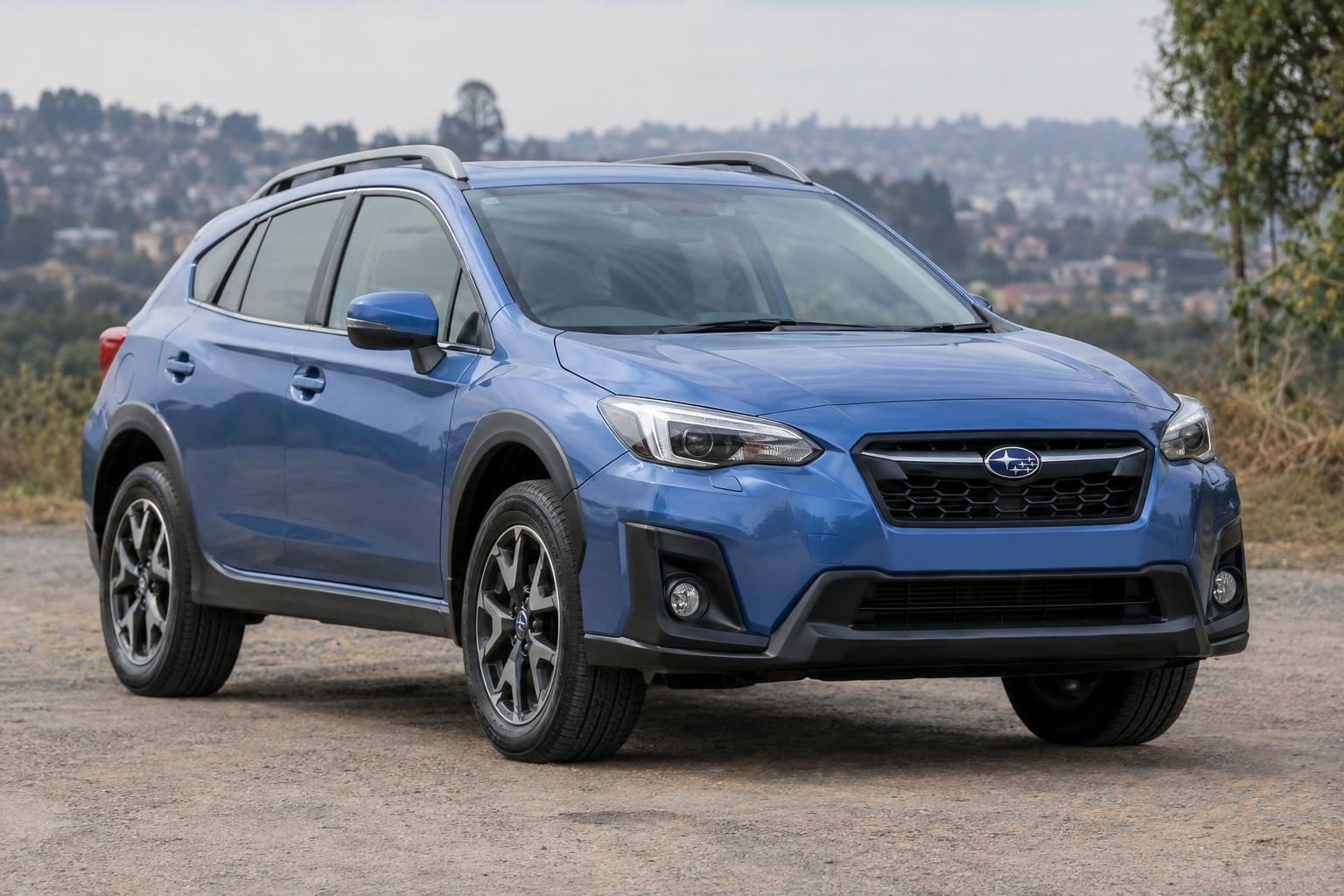 A blue second-generation Subaru XV parked outdoors.
| Spec | Subaru XV (2019 Hybrid) | Toyota C-HR (2017 Hybrid) | Honda Vezel (2015 Hybrid) |
|---|---|---|---|
| Ground clearance | 220 mm | approx. 150 mm | approx. 185 mm |
| Drivetrain | Full-time Symmetrical AWD | FWD | FWD |
| Engine | FB20, 2,000 cc e-BOXER | 2ZR-FXE, 1,800 cc | LEB, 1,500 cc |
| Engine output (ICE only) | 145 hp | 98 hp | 132 hp |
| Fuel economy (JC08 lab cycle) | 19.2 km/L | 30.2 km/L | 27.0 km/L |
| Length x width | 4,465 x 1,800 mm | 4,360 x 1,795 mm | 4,295 x 1,770 mm |
| Seats | 5 | 5 | 5 |
| Sample auction grade | 4 | 3.5 | 4 |
| Listed-price bracket (UGX) | around the 40M mark | the 40M+ range | the low 30M range |
Two warnings about that table. The JC08 figures are Japanese laboratory numbers and every one of these cars will return considerably less in Kampala traffic; treat them as a ranking, not a forecast. And the price brackets are the listed import price only. Import duty, VAT, port clearance and registration are all separate and are paid by you.
The C-HR case. Japan-spec 1.8 hybrids are front-wheel drive, confirmed on the listing itself, with 98 hp and a compression ratio of 13.0. It is the most efficient of the three on paper and a pleasant thing in town. On anything unmade, roughly 150 mm of clearance and two driven wheels run out of ability quickly. There is also a cost wrinkle worth knowing: on comparable examples, the C-HR's estimated landed total in Uganda comes out noticeably higher than a hybrid XV's, even though the XV is the more capable car. Check the "Estimated landed cost" panel on each vehicle page rather than judging by the listed price alone.
The Vezel case. The 1,500 cc LEB hybrid makes 132 hp, drives the front wheels, and is the efficiency champion in real use as well as on the cycle. It is also the most practical interior of the three, with a genuinely flat load floor and a taller cabin (1,265 mm of cabin height against the XV's 1,200 mm). For Kampala commuting plus sealed-road runs to Jinja or Entebbe, the Vezel makes a lot of sense and costs less to buy. It simply was not designed for rough surfaces, and no amount of goodwill changes that.
The honest summary. If you drive 95% tarmac and take one or two upcountry trips a year on sealed roads, the Vezel is very likely the better financial decision, and nobody should talk you out of it. The XV earns its premium only when the roads you meet regularly are not sealed.
Who Should Buy the Subaru XV — and Who Should Not?
The XV is a specialist wearing an everyday jacket. Matching it to the wrong driver is the single most common way buyers end up disappointed with an otherwise excellent car.
It makes a lot of sense if you:
- Drive regularly to western Uganda (Fort Portal, Kasese, Kabale), the northern routes towards Gulu and Arua, or the eastern highlands, where tarmac gives way to murram without warning
- Need real all-weather capability in the 30M to 45M bracket but cannot stretch to a Prado or a RAV4
- Are stepping down from a Hilux or Fortuner and do not want to lose your confidence on bad surfaces
- Are willing to service the CVT on schedule with the correct fluid, which is a small commitment but a non-negotiable one
Look elsewhere if you:
- Commute almost entirely in Kampala and are counting fuel shillings. A Vezel hybrid or a Toyota Aqua will cost you less every week
- Need a third row. The XV is a strict five-seater. For a bigger Subaru, the Subaru Uganda model guide covers the Forester, Outback and Legacy
- Are stretched to your absolute maximum on purchase price, leaving nothing for proper maintenance. Skipping CVT fluid changes is where XV ownership goes wrong
- Want the widest possible workshop network. Toyota still has the edge in Uganda and it is not close
What Does Servicing a Subaru XV in Uganda Actually Involve?
This section exists because it is the question buyers ask last and worry about most. The short version: the engine is sound, the gearbox needs discipline, and the network needs planning.
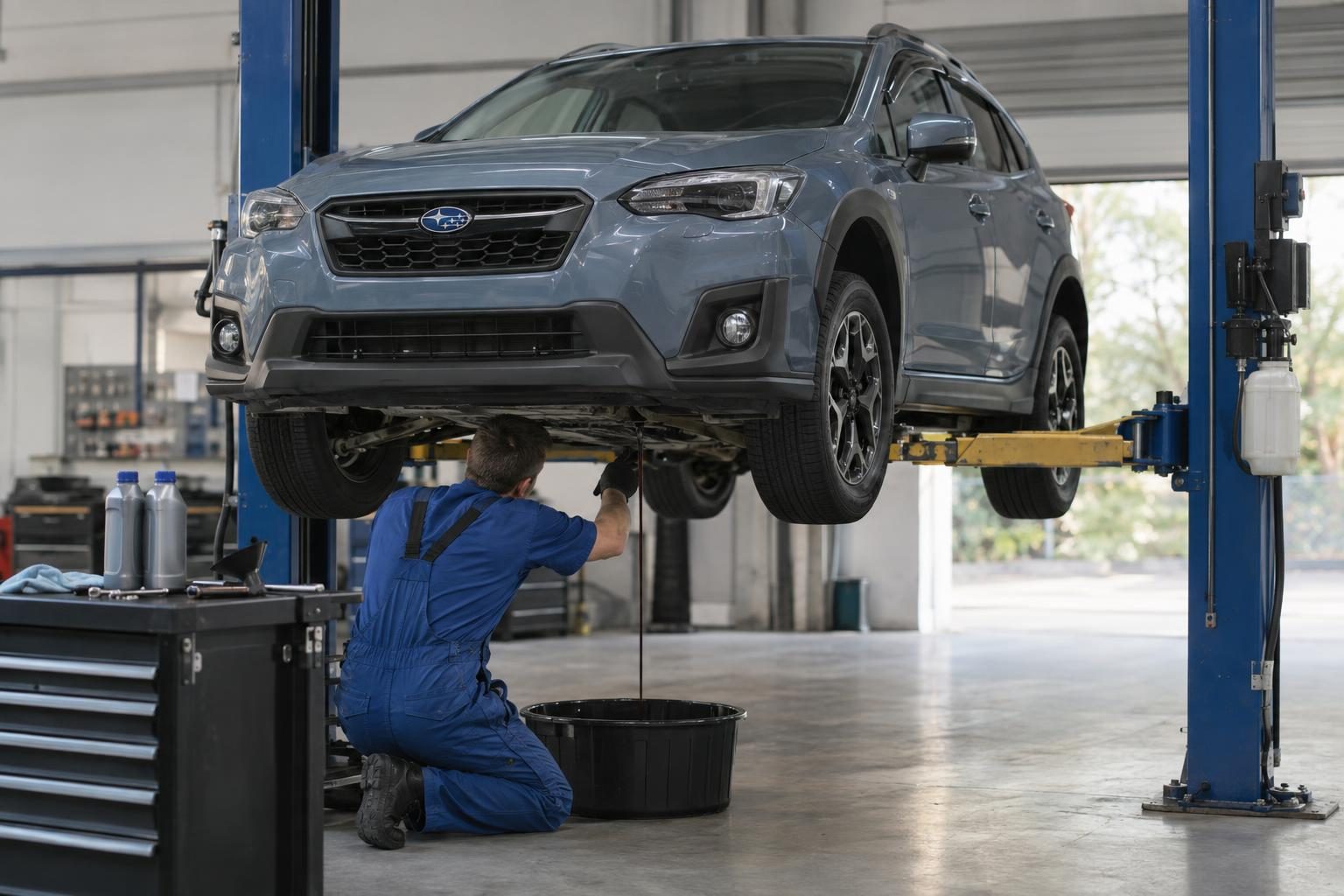 A mechanic services a raised Subaru XV in an independent workshop.
The FB20 engine. Subaru's FB series routes coolant through dedicated passages rather than relying on the head gasket the way the older EJ engines did, and the head gasket failures that dogged Subaru's reputation belong to that earlier family. Very early FB20 builds had a separate concern around higher-than-normal oil consumption. Later builds of the engine, including the 12.5 compression ratio versions in the 2017 petrol and 2019 and 2021 hybrid cars, are regarded as considerably more settled. That is context, not a promise: check the oil level regularly on any imported car regardless of brand.
The Lineartronic CVT. This is the item that matters. It requires Subaru Genuine Lineartronic CVT fluid, and generic CVT fluid is not a substitute. Subaru's official maintenance schedule lists CVT fluid inspection at 60,000 miles (approximately 96,000 km) or every 48 months under normal conditions, with a tighter severe-duty interval for dusty roads, sustained off-road use, and repeated hill climbs — the kind of driving upcountry Uganda routes demand. Failure risk climbs sharply on units where the fluid is left without attention across those conditions, so dusty-road driving pushes you toward the shorter end of the interval. Dusty roads and slow technical driving push you toward the shorter end of that window.
The network. Subaru service in Uganda exists but is thinner than Toyota's. Identify your nearest competent Subaru workshop before you buy, not after, and factor the travel into your ownership plan. If you are buying an EyeSight car, ask that same workshop about camera recalibration while you are there.
None of this should frighten you off. Owners who maintain the gearbox properly rarely have trouble with it. Owners who treat a CVT like a sealed-for-life box eventually do.
Subaru XV Options Available Through Carbarn Uganda
Carbarn's XV range is sourced directly from Japanese auctions and owned outright by Carbarn, with no third-party broker able to cancel your order. Every listing carries two condition reports you can read before you pay: the official Japanese auction sheet with its grade, and Carbarn's own in-house inspector report with the detail the grade leaves out.
On the hybrid side, the 2019 XV e-BOXER Hybrid 4WD is the pick of the range for most buyers: 42,000 km, Grade 4, silver, 145 hp, with a single inspection note about surface marks and a small dent on a door panel. The 2021 XV e-BOXER Hybrid EYESIGHT 4WD is the newest option, also Grade 4, at 82,737 km, and its inspection came back with no damage found and 4 mm of tread on all four tyres. Both sit around the 40M mark on listed price.
For buyers who want the clearance and the AWD without paying the hybrid premium, the 2017 petrol cars are the value entry: 154 hp, the same 220 mm clearance and the same permanent AWD, in Grade 4 and Grade 3.5 condition in the low-to-mid 30M range. Browse the full range on the Subaru XV model page and the XV Hybrid page, with model-level detail in the Subaru specification database.
On cost, be clear with yourself from the start. The listed price covers the vehicle, the shipping and the inspection. Import duty, VAT, port clearance and registration are additional and are yours to pay. Every vehicle page carries an "Estimated landed cost" panel that breaks the real total down for Uganda, and the import rules page sets out eligibility, including the 15-year age limit.
Everything else runs through one place. Carbarn handles sales, payment on an official proforma invoice (bank transfer to Carbarn Japan or card), JEVIC certification before the car leaves Japan, and RoRo shipping to Mombasa followed by road transport into Uganda, typically about 6 to 10 weeks from purchase confirmation to handover. Your dashboard holds the invoice, the inspection sheets, the bill of lading, the certificates and live vessel tracking, and the how to buy guide walks through the five steps. There is no Kampala showroom and no local yard: these are Japanese cars, right-hand drive as Uganda requires, bought on documentation rather than a test drive, which is exactly why two inspection reports come before payment rather than after.
Frequently Asked Questions (FAQs)

Related Cars


Jason Sildir
Passionate Automotive Blogger
I am a Turkish-Australian automotive writer with a passion for hybrid vehicles and rugged 4WD adventures. My writing combines detailed technical insights with a love for outdoor exploration and Aussie driving culture. Having guest posted for leading automotive sites, my mission is to educate and inspire drivers considering greener and tougher vehicle options.

Published Date
September 30, 2026