For Kampala buyers, fuel prices can make a small difference in your monthly budget, especially when traffic turns a short trip into a long crawl. The Toyota Passo appeals with its small engine and compact body. The Toyota Premio is substantially larger, which may suit buyers who prioritise cabin and luggage space, though exact comfort depends on the vehicle and trim.
So which one should you choose? This comparison looks at Toyota Premio and Passo fuel efficiency in Uganda, official Japanese test figures, engine sizes, Kampala driving, upcountry travel and condition checks. It also explains why one car can use less fuel while the other may still be the better fit for your family.
Quick Answer
- The Toyota Passo is the fuel-efficiency winner.
- Selected Passo variants reach 28.0 km/L on the JC08 cycle, according to Toyota Japan.
- Selected Premio variants reach up to 19.2 km/L JC08.
- The Premio is substantially larger, which may suit buyers who prioritise passenger or luggage space.
- Actual Kampala consumption varies with weather, congestion, air-conditioning and driving method.
Which Toyota uses less fuel, Premio or Passo?
The Passo uses less fuel on official Japanese figures because it is smaller, lighter and commonly fitted with a 1.0-litre engine. Toyota’s historical catalogue for the 2016–2023 Passo generation lists selected variants at 24.4 to 28.0 km/L JC08, while selected Premio variants reach 14.8 to 19.2 km/L JC08 (Toyota Passo fuel-economy catalogue, 2026; Toyota Premio fuel-economy catalogue, 2026). These are catalogue figures, not a claim that the Passo is currently produced.
The cleanest comparison uses the same test cycle. Toyota’s 2018 Passo specification lists 28.0 km/L JC08 for the 2WD version and 24.4 km/L for 4WD. Toyota’s 2015 Premio specification lists 19.2 km/L for the 1.5-litre 2WD, 16.4 km/L for the 1.8-litre 2WD, 15.6 km/L for the 2.0-litre 2WD and 14.8 km/L for the 1.8-litre 4WD (Toyota 2018 Passo specifications, 2018; Toyota 2015 Premio environmental specifications, 2015).
| Variant |
Test cycle |
Official figure |
| Passo 2018 2WD |
JC08 |
28.0 km/L |
| Passo 2018 4WD |
JC08 |
24.4 km/L |
| Premio 1.5 2WD |
JC08 |
19.2 km/L |
| Premio 1.8 2WD |
JC08 |
16.4 km/L |
| Premio 2.0 2WD |
JC08 |
15.6 km/L |
| Premio 1.8 4WD |
JC08 |
14.8 km/L |
Toyota also lists the 2018 Passo at 21.0 km/L WLTC for 2WD and 19.0 km/L WLTC for 4WD. WLTC and JC08 are different laboratory tests, so they should not be placed in one simple ranking. Neither figure predicts your result in Kampala.
The short version: The Passo is the official fuel-economy winner. Toyota lists selected 2018 versions at up to 28.0 km/L JC08, compared with up to 19.2 km/L JC08 for selected Premio versions. These figures are laboratory benchmarks, not promised Kampala consumption.
The Toyota Passo for Ugandan buyers
The Toyota Passo makes the most sense if you mostly drive in Kampala and want a compact car with low official fuel use. The M700A specification uses a 996 cc 1KR-FE petrol engine, CVT transmission, front-wheel drive and a five-seat, five-door hatchback layout (Toyota Passo MODA specifications, reference page).
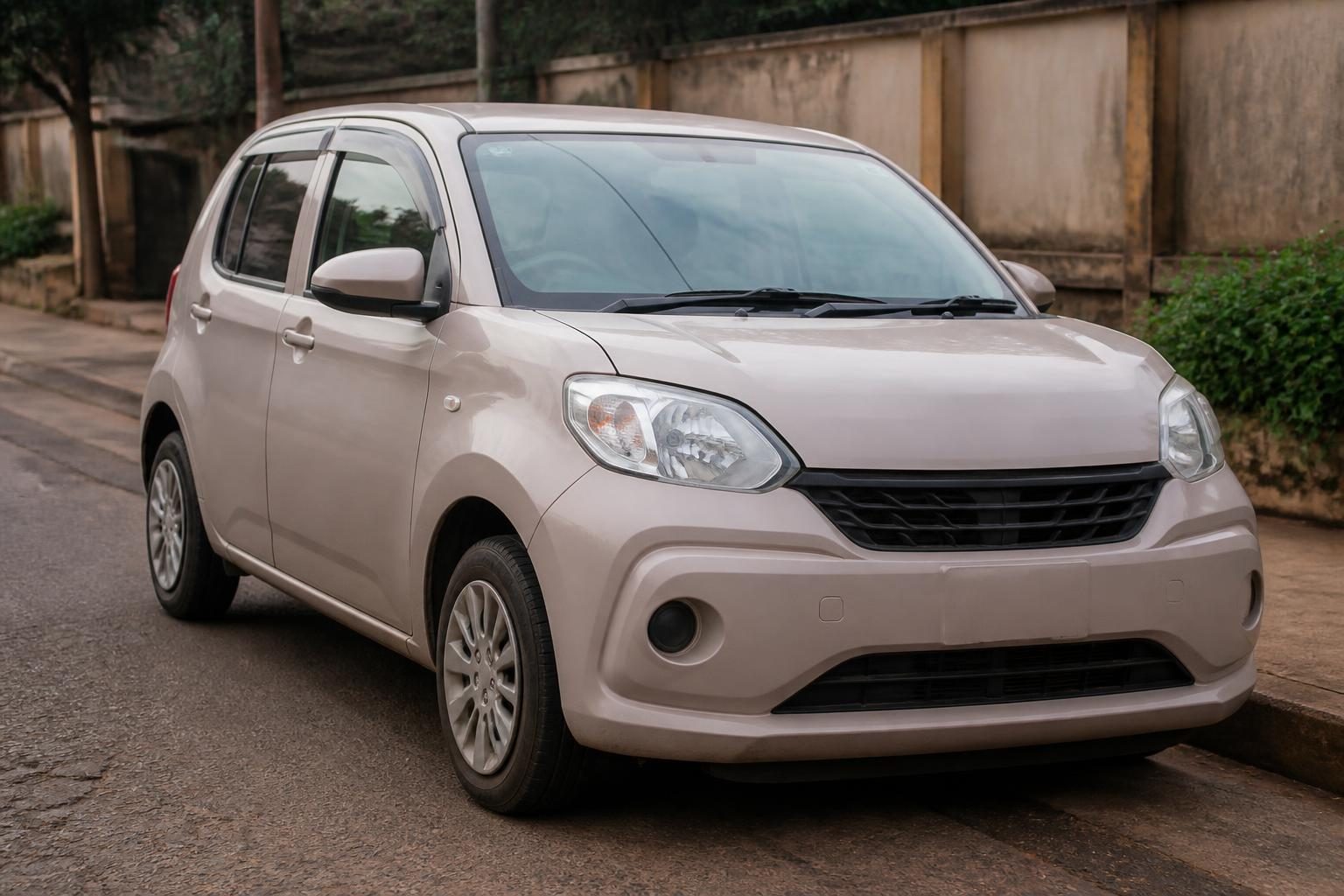 2018 Toyota Passo
The same specification records 69 PS, a body length of 3,680 mm, a width of 1,665 mm, a height of 1,525 mm and a 4.6-metre minimum turning diameter. Those dimensions matter when you are squeezing through busy streets, parking near shops or manoeuvring around crowded residential roads.
The Passo may suit first-time owners and commuters who value a small footprint. Its five doors make daily use practical, while the CVT is designed for automatic driving in slow traffic. The 1.0-litre engine is the main trade-off: buyers who regularly carry a full load or tackle steep climbs should assess the exact vehicle and their likely use rather than rely on the headline fuel figure.
What does that mean in practice? You gain easier city driving and lower official fuel use. Toyota’s dimensions show a much smaller car than the Premio, but they do not provide a boot-volume comparison or prove how comfortable it will feel when fully loaded. Check the exact vehicle details before deciding.
A smaller car only saves fuel when it also suits your normal load. If you regularly carry a full family, choosing the Passo purely for its headline figure may create a comfort problem later.
The urban verdict: The Passo combines a 996 cc engine, 69 PS, five seats and a 4.6-metre turning diameter. Toyota’s 2018 specification lists up to 28.0 km/L JC08, making it a strong option for Kampala commuters who value compact size and low official fuel use.
The Toyota Premio for Ugandan buyers
The Toyota Premio suits buyers who want more sedan comfort and passenger space than the Passo, while keeping fuel use more sensible than a larger SUV. Toyota’s 2015 figures range from 14.8 to 19.2 km/L JC08, depending on engine and drivetrain (Toyota 2015 Premio environmental specifications, 2015).
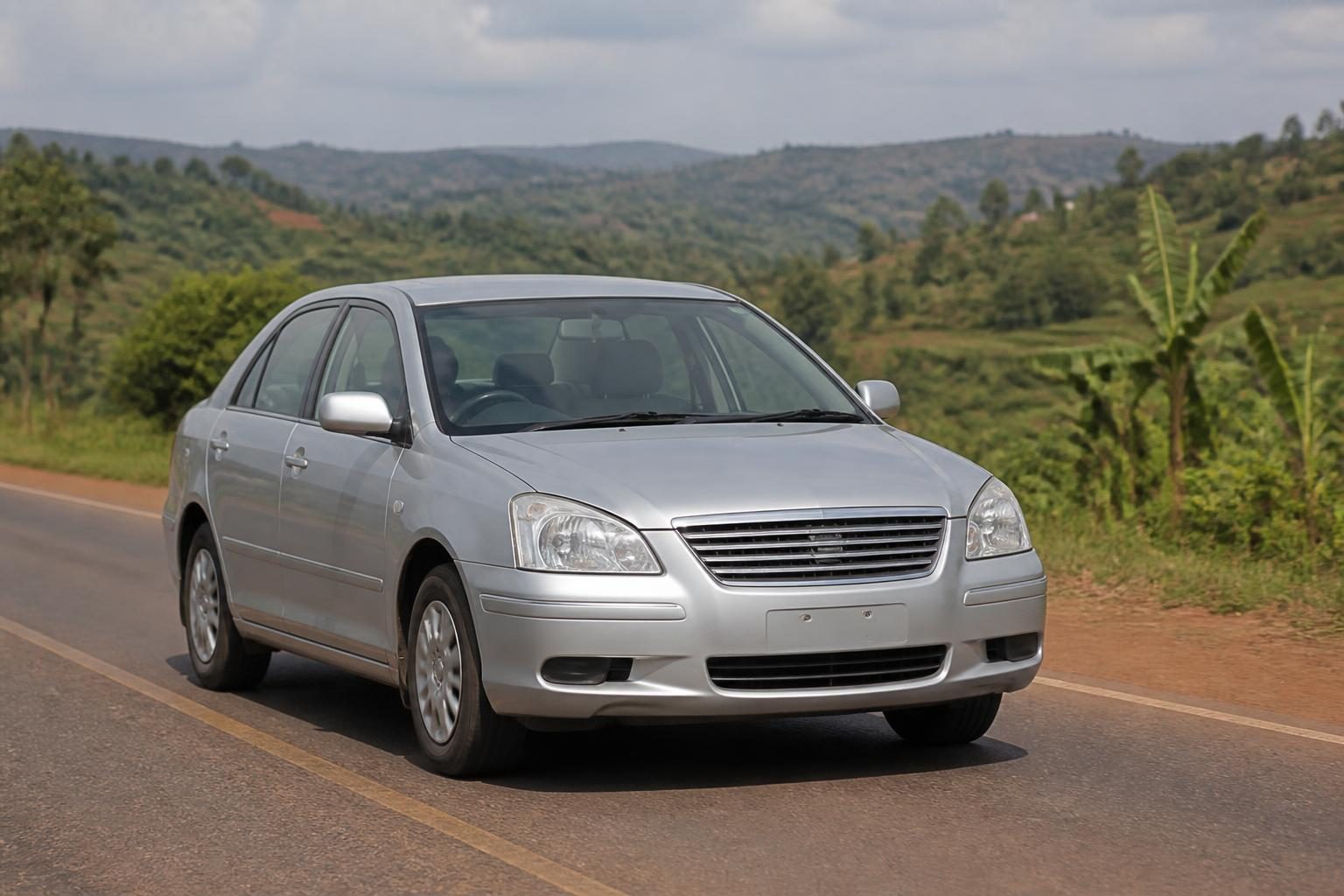 Silver sedan on a rural paved road with green hillside scenery.
The Premio was offered with 1.5-litre, 1.8-litre and 2.0-litre petrol engines. The 1.5-litre 2WD is the economy-focused version at 19.2 km/L JC08. The 1.8-litre 2WD records 16.4 km/L, the 2.0-litre 2WD records 15.6 km/L and the 1.8-litre 4WD records 14.8 km/L.
The Premio is substantially larger, with more cabin length and width in Toyota’s specifications. That makes it the more likely fit for frequent adult passengers and luggage, although condition, seating position and exact trim still matter. Its larger body may be less convenient in tight urban spaces, and its official fuel figures are lower than the Passo’s.
Would you notice the difference every day? You probably would if your commute includes heavy traffic. You may value the Premio more if you spend weekends travelling with passengers, bags or business equipment.
A Premio also deserves closer condition checks because many examples will be older imports. Look for missed servicing, suspension wear, accident repairs and signs of poor maintenance. No dedicated Premio listing page was supplied, so treat it as a general import recommendation.
The sedan verdict: The Premio is not the fuel-economy winner, but its selected 1.5-litre 2WD version reaches 19.2 km/L JC08. It makes more sense for buyers who accept higher fuel use in exchange for adult passenger comfort, boot space and longer-distance composure.
What fuel-saving alternative should you consider?
The Toyota Aqua is worth considering if your main priority is reducing fuel use in stop-start traffic and you are open to a hybrid hatchback. Current NHP10 specifications show a 1,500 cc hybrid system, automatic CVT transmission, front-wheel drive and five seats (Toyota Aqua model specifications, 2026).
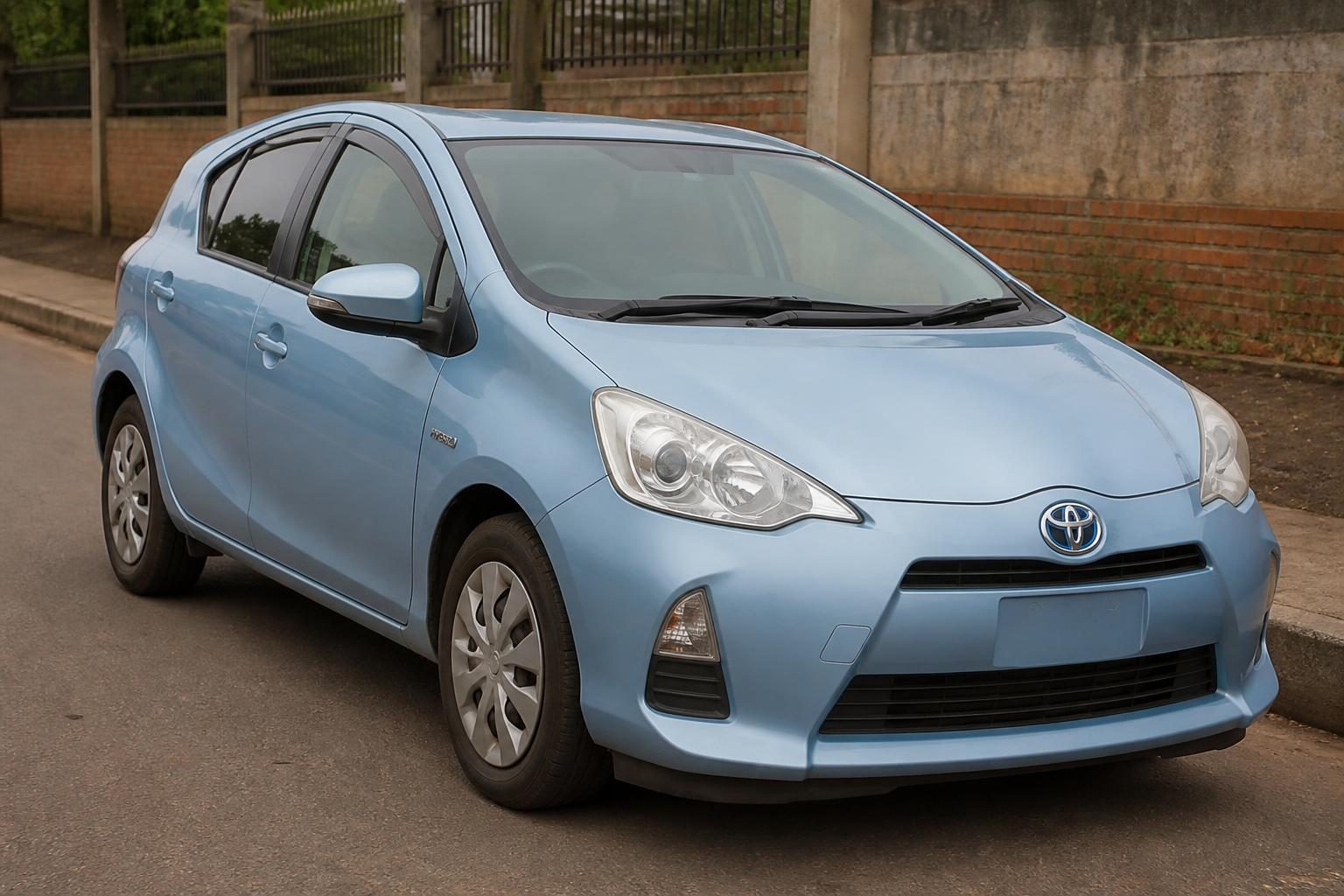 2015 Toyota Aqua
The Aqua is not a direct replacement for either car. It has a compact hatchback body like the Passo, and its hybrid powertrain may suit Kampala commuters who spend much of the day slowing and starting in traffic. Confirm the exact variant and its official test-cycle figure before treating it as a fuel-saving comparison.
Exact fuel results depend on the variant and test cycle. This article does not publish an Aqua figure beside the Passo and Premio numbers because an official result for the exact variant must be confirmed first. Check the Toyota specifications database before comparing versions.
The Passo is the petrol economy choice in this comparison. The Aqua is a separate hybrid path, while the Premio remains the better fit when space and comfort matter more than the lowest fuel use.
Premio vs Passo: which one suits your driving?
The Passo is the better fit for Kampala commuting, while the Premio suits families and regular highway use. Toyota’s historical catalogues show a JC08 range of 24.4 to 28.0 km/L for selected Passo versions and 14.8 to 19.2 km/L for selected Premio versions (Toyota Passo fuel-economy catalogue, 2026; Toyota Premio fuel-economy catalogue, 2026).
| Factor |
Toyota Passo |
Toyota Premio |
| Best fit |
Kampala commuting and first-time ownership |
Families, professionals and regular highway use |
| Typical engine |
1.0-litre petrol |
1.5-litre, 1.8-litre or 2.0-litre petrol |
| Official economy |
Up to 28.0 km/L JC08 on selected variants |
Up to 19.2 km/L JC08 on selected variants |
| Body style |
Compact five-door hatchback |
Larger five-seat sedan |
| City manoeuvrability |
Smaller footprint, likely easier to park |
Larger footprint, so check your usual routes and parking |
| Cabin and luggage fit |
Smaller body; confirm your load needs |
Larger cabin footprint; likely to suit more passengers and luggage |
| Upcountry use |
Depends on load, route and condition |
Depends on load, route and condition |
| Who should skip it |
Buyers who regularly need more cabin space |
Buyers whose only target is minimum official fuel use |
The Passo wins on official fuel economy and its smaller dimensions may make parking easier. The Premio is the larger car and may suit buyers who prioritise passenger and luggage space. A well-maintained car may serve you better than a neglected one, whatever the model’s headline figures.
Choose Passo for lower official petrol use. Choose Premio if the larger cabin footprint suits your passengers and luggage. Consider Aqua if a hybrid hatchback fits your city-driving needs.
What should you check before importing one?
Exact year, drivetrain and condition matter more than the model badge alone. Uganda’s 15-year import-age rule should be checked against the latest official URA and UNBS guidance before payment. Confirm the exact cut-off for the vehicle’s manufacture date and eligibility using the current Uganda vehicle import rules before committing to a car.
Check the vehicle’s manufacture date and eligibility before comparing price or equipment. The applicable cut-off can depend on the latest URA and UNBS interpretation, so confirm it for the exact vehicle before payment. Then review the official Japanese auction sheet, auction grade, odometer record and detailed inspection information. A lower price does not make an ineligible car importable.
A sensible mechanical checklist includes:
- cold-start behaviour and exhaust smoke;
- CVT operation during acceleration;
- engine oil leaks;
- cooling-system condition;
- suspension noise;
- tyre wear and alignment;
- air-conditioning performance;
- accident repairs;
- underbody corrosion or damage;
- engine size and drivetrain suitability.
Do not compare a maintained 1.5-litre Premio with a worn-out 1.0-litre Passo as though fuel economy decides everything. Condition affects reliability, comfort and ownership cost long after the first fuel bill.
How can a Japan-sourced car be checked before shipping?
The safest comparison starts with documents that identify the exact vehicle, not just its model name. Confirm the auction grade, odometer, model code, drivetrain, inspection notes and eligibility before making payment. For import guidance, read Uganda’s vehicle import rules and the five-step buying process.
Carbarn supports Ugandan buyers with Japanese-market vehicles, two inspection records before payment, the official auction sheet and an in-house inspection report. Check the individual vehicle page to see whether JEVIC, EAA or another inspection is included. Its dashboard provides invoices, bills of lading, inspection documents and live vessel tracking. Vehicle pages may include shipping and EAA inspection in the displayed price; Uganda duty, VAT, environmental charges, other taxes, destination inspection, registration and plates appear separately in the estimated landed-cost calculation. Confirm the final inclusions on the pro forma invoice. Shipping and delivery are estimates: Carbarn currently describes the route as roughly 45 days, but vessel schedules, clearance and inland transport can change the final delivery time. The route is by RoRo from Japan to Mombasa or Dar es Salaam, then by road to Uganda. See Carbarn’s Japan-to-Uganda buying process, Toyota cars available for import to Uganda and the 2015 Toyota Aqua vehicle page for the relevant details.
Which should you choose?
The Passo is the fuel-saving winner on official figures, while the Premio’s larger body may suit buyers who prioritise passenger and luggage space. Toyota’s official JC08 figures show a gap between 28.0 km/L for a selected Passo 2WD and 19.2 km/L for a selected Premio 1.5 2WD, but those results do not predict every Kampala journey (Toyota 2018 Passo specifications, 2018; Toyota 2015 Premio specifications, 2015).
Choose the Passo if you mostly drive in Kampala, value a smaller body and want the lowest official petrol-use figure. Choose the Premio if its larger cabin footprint suits your passengers and luggage. Consider the Aqua if you want a hybrid hatchback and the exact variant’s specifications fit your needs.
Before importing, verify the exact year, engine, drivetrain, auction grade, odometer and inspection report. You can compare Toyota options for Ugandan buyers and Toyota specifications before narrowing your choice.


