

Which Japanese Models Offer the Best Landed Value in Uganda after URA's Valuation Update
Read Our Blogs today and Learn More

A low Japanese auction price does not always produce the lowest cost in Uganda. Customs valuation, vehicle age, engine size, shipping, clearance and registration can change the result before the car reaches Kampala.
In 2026, Uganda Revenue Authority’s official Motor vehicle Value Guide is marked “As at 01st August 2026” (URA Motor vehicle Value Guide, 2026). This article uses that date as its reference point. It compares practical Japanese models by valuation exposure, fuel use, age, inspection evidence and everyday usefulness.
This is a buying framework, not a personal customs assessment. Always match the exact vehicle record with the current URA database before payment.
Quick Answer
- URA’s August 2026 database is a valuation reference, not simply an acceptance of the importer’s invoice.
- Make, model, frame, body type, engine capacity, year, fuel and drive can affect the relevant entry.
- Toyota Aqua, Corolla hybrids, Fielder, Fit and Note are strong starting points for urban comparisons.
- Swift offers a simpler small-engine petrol alternative.
- Forester and RAV4 suit buyers needing more clearance, but usually deserve a use-case comparison rather than a lowest-cost ranking.
Freshness note: This article uses the URA guide marked 1 August 2026. Values, import rules, inspection requirements and vehicle listings can change. Check for a newer database before committing to a vehicle.
What does URA’s August 2026 used-car valuation guide show?
URA’s 1 August 2026 guide provides the closest valuation classification for a specific vehicle. Its table includes the HSC code, which identifies the relevant customs classification, alongside the description, engine capacity and CIF value (URA Motor vehicle Value Guide, 2026). Buyers should compare the exact vehicle description, not just its badge.
URA’s import guidance says the used-motor-vehicle database forms the valuation basis for used imports, rather than relying only on the importer’s invoice (URA customs valuation guidance, 2026). That does not make the invoice irrelevant. It means buyers should not assume a low invoice automatically settles the customs value.
The relevant details include the make, model, frame or chassis description, body type, engine displacement, year of manufacture, fuel and drive configuration. URA lists these characteristics in its customs valuation guidance (URA Frequently Asked Customs Valuation Questions, 2026).
CIF means the cost, insurance and freight value used in the valuation record. It is one field in the guide, not a complete estimate of every cost you will pay before registration.
What the database can tell you: the closest classification and benchmark for a specific vehicle.
What it cannot tell you alone: the complete cost of shipping, clearance, registration, ownership and future fuel use.
What does “landed value” mean for a Ugandan car buyer?
A vehicle offers strong landed value when its purchase, import and ownership burden suits the buyer’s use. In 2026, individual vehicle pages show a separate Estimated landed cost figure, but the 2016 Toyota Aqua vehicle page warns that the estimate is not final (2026).
Think of the cost in stages:
- Japanese vehicle price
- Inspection and shipping
- URA customs valuation
- Customs-related charges
- Port clearance
- Road transport to Uganda
- Registration and local handover
The listed vehicle price covers the vehicle, shipping and inspection. It does not cover import duty, VAT, port clearance or registration. A vehicle page estimate can help you compare options, but it is not a final customs bill.
A cheaper petrol vehicle can still lose its advantage if it is older, uses more fuel, has weak inspection evidence or falls into a less favourable vehicle classification. That is why landed value is broader than the Japanese purchase price.
The strongest comparison is not “cheap car versus expensive car”. It is “complete cost path versus complete cost path”.
Which Japanese models offer the strongest provisional value?
The strongest provisional value depends on matching the vehicle’s age, identity, inspection evidence and use case with the August 2026 URA record. For example, a representative 2016 Toyota Aqua page lists a 1,500cc hybrid with 66,000 kilometres and auction grade 3.5 (2016 Toyota Aqua vehicle page, 2026). That makes it a useful starting point, not a definitive lowest-cost ranking.
| Model | Main value case | Main caution | Likely buyer fit |
|---|---|---|---|
| Toyota Aqua | Compact hybrid and urban efficiency | Battery, age and variant | Kampala commuter |
| Toyota Corolla Hybrid | Newer family format | Higher purchase exposure | Daily family use |
| Corolla Fielder Hybrid | Hybrid system with wagon space | Exact frame and year | Family or business use |
| Honda Fit Hybrid | Compact non-Toyota alternative | Variant and battery evidence | Small-car buyer |
| Nissan Note e-Power | Practical small hybrid | Confirm system and support | City commuter |
| Suzuki Swift | Small petrol footprint | Running costs versus hybrids | Budget-conscious city use |
| Toyota Prius | Larger hybrid cabin | Odometer and battery checks | Efficiency-focused buyer |
| Toyota RAV4 | Space and clearance | Larger vehicle exposure | Mixed-road family use |
| Toyota C-HR | Hybrid crossover format | Higher equipment benchmark | Compact SUV buyer |
| Subaru Forester | Clearance and utility | Petrol consumption | Upcountry traveller |
Toyota Aqua
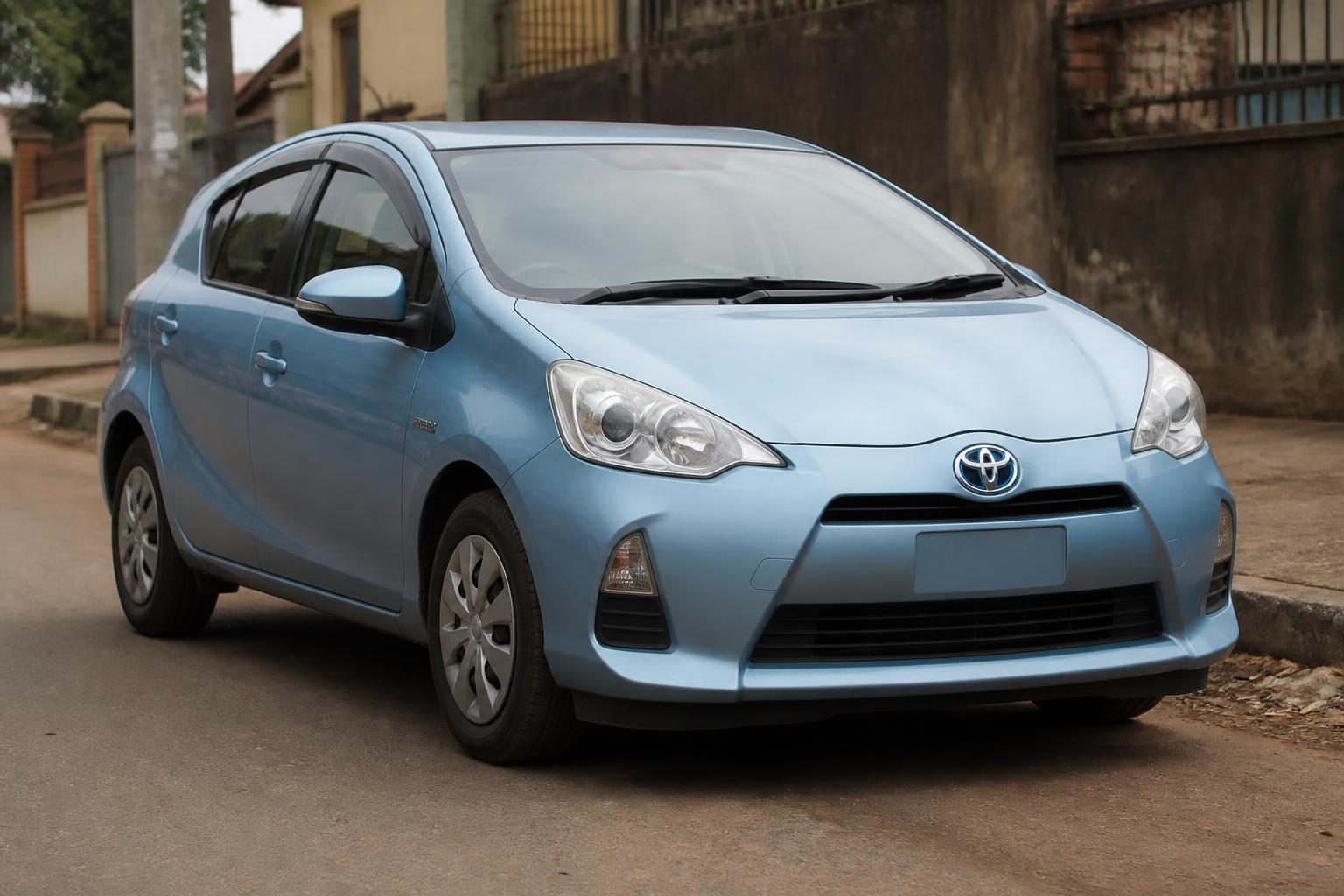 2016 Toyota Aqua
The 2016 Toyota Aqua is a 1,500cc hybrid with 66,000 kilometres, automatic transmission and 2WD. It makes sense for Kampala traffic and short daily trips. Its main valuation questions are the older variant, battery evidence and exact URA classification.
Toyota’s 2026 Aqua catalogue lists 1,490cc and up to 34.3 km/L under the WLTC cycle for newer versions (Toyota Aqua vehicle catalogue, 2026). That figure is not the 2016 NHP10’s figure. Check the older variant’s official cycle, battery evidence, auction notes and exact URA classification.
Toyota Corolla Hybrid
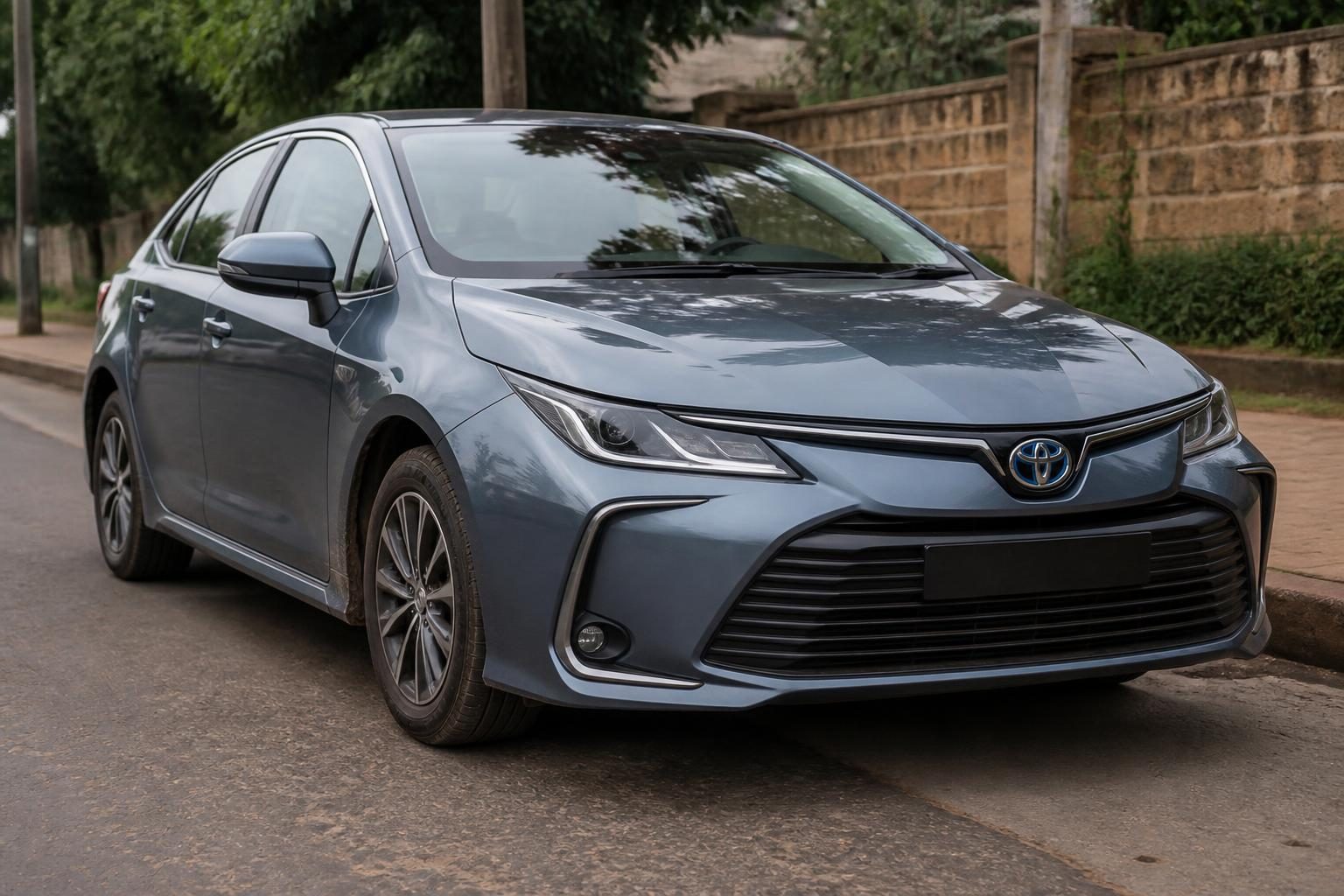 2022 Toyota Corolla
The 2022 Toyota Corolla is listed as a hybrid with 110,897 kilometres and grade 4. The fetched vehicle record does not independently establish the Touring G variant or 1,800cc engine, so confirm those details before comparing its space and valuation with a small hatchback.
Toyota’s 2026 Corolla Touring catalogue lists a 1,797cc hybrid with published WLTC figures ranging from 24.9 to 28.8 km/L, depending on variant and drive (Toyota Corolla Touring catalogue, 2026). These are current-model figures, not an exact fuel-economy claim for the 2022 example. It may suit families, but buyers focused on the lowest entry budget should compare an Aqua or Fit first.
Toyota Corolla Fielder Hybrid
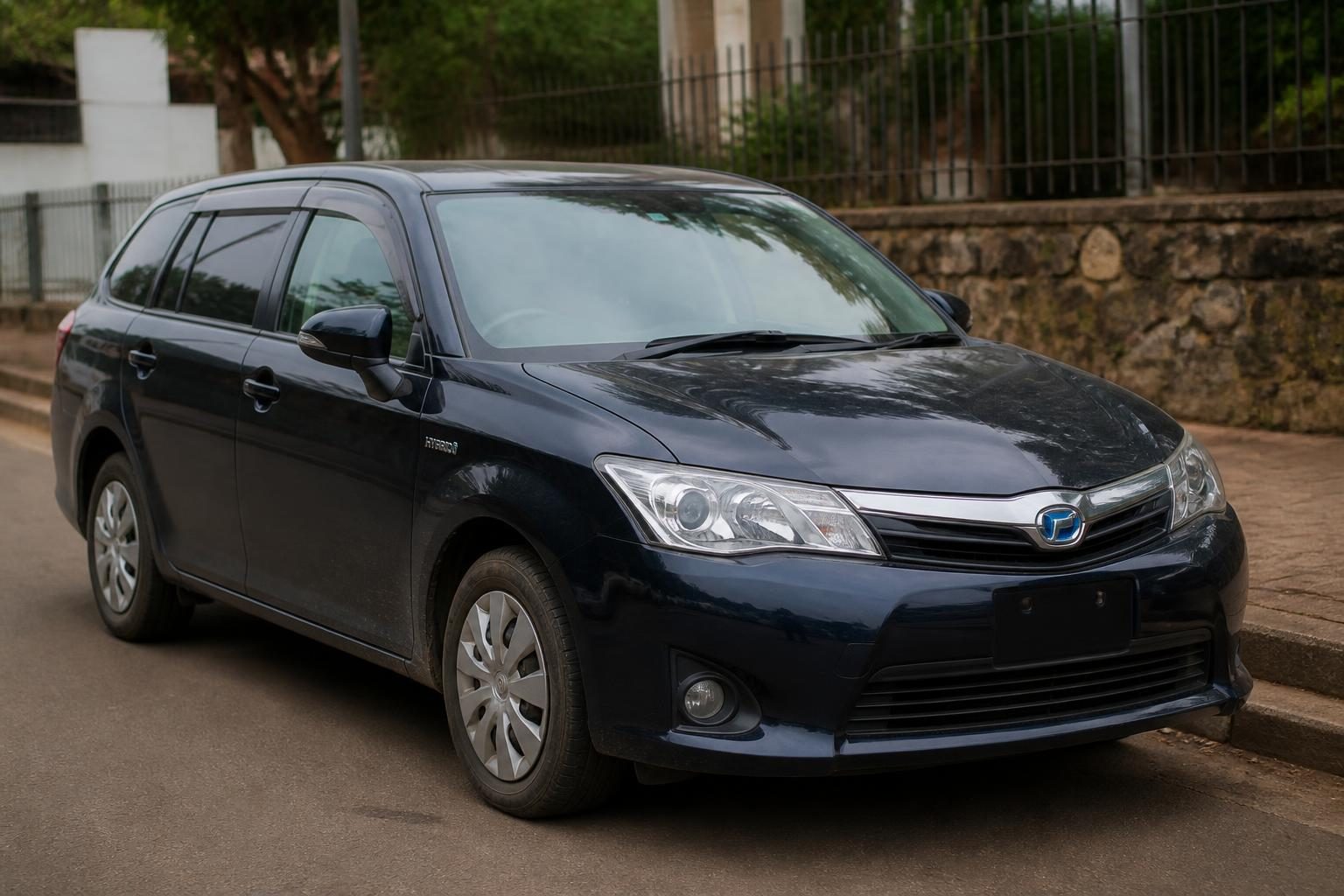 2015 Toyota Corolla Fielder
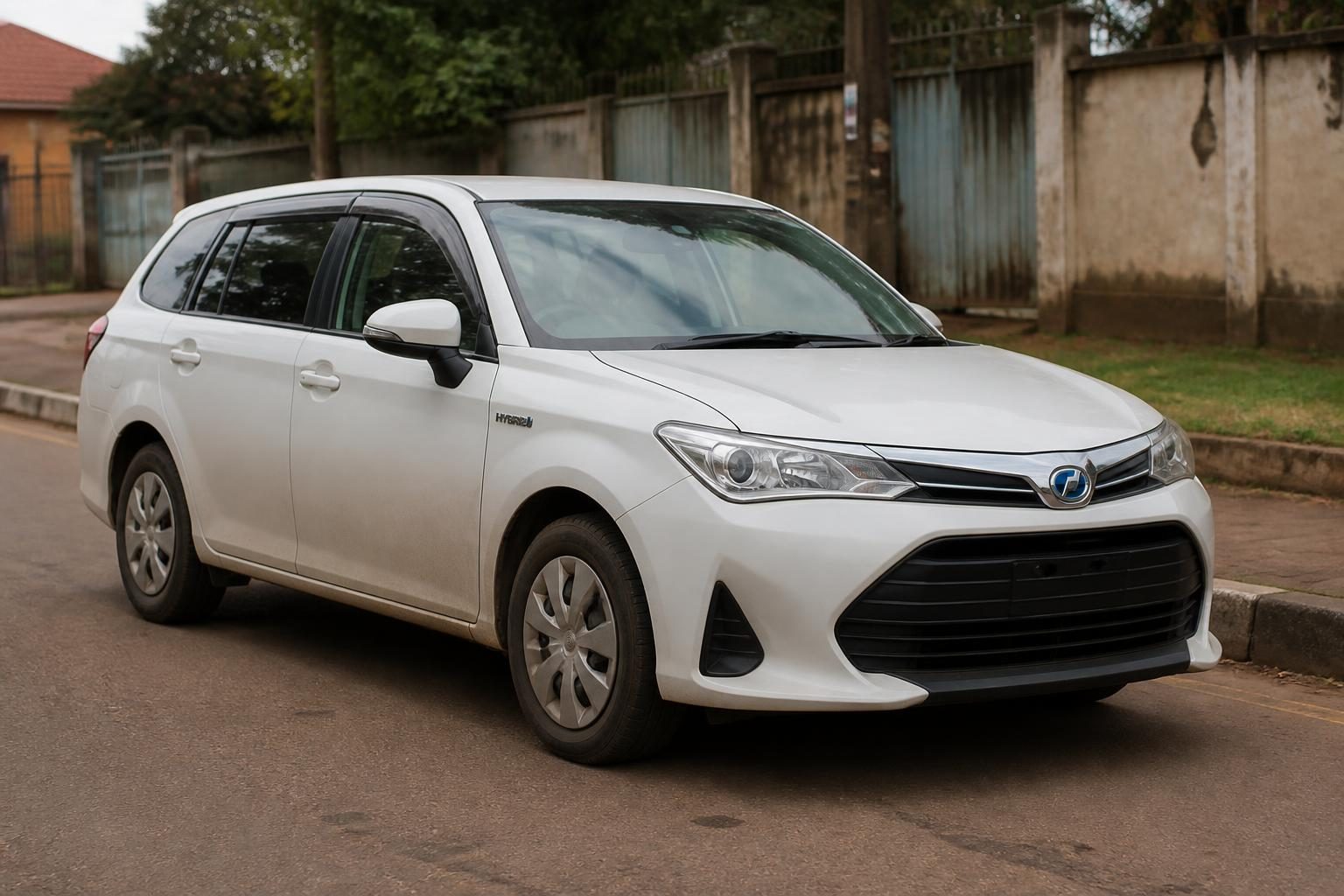 2015 Toyota Corolla Fielder
The Toyota Corolla Fielder model page is the relevant starting point for this wagon. The cited vehicle record should not be treated as evidence for a Corolla Fielder’s body type, engine or hybrid specification. Confirm the actual Fielder listing, frame description and auction sheet before comparing its carrying space or valuation with an Aqua.
Toyota’s official Fielder data uses different figures and test cycles by model year. For a 2015 example, confirm the exact variant’s official JC08 figure, then match its year, frame description and URA row carefully (Toyota Corolla Fielder catalogue, 2026). It has less remaining eligibility headroom than a newer vehicle, but it is not yet at the 15-year limit.
Honda Fit Hybrid
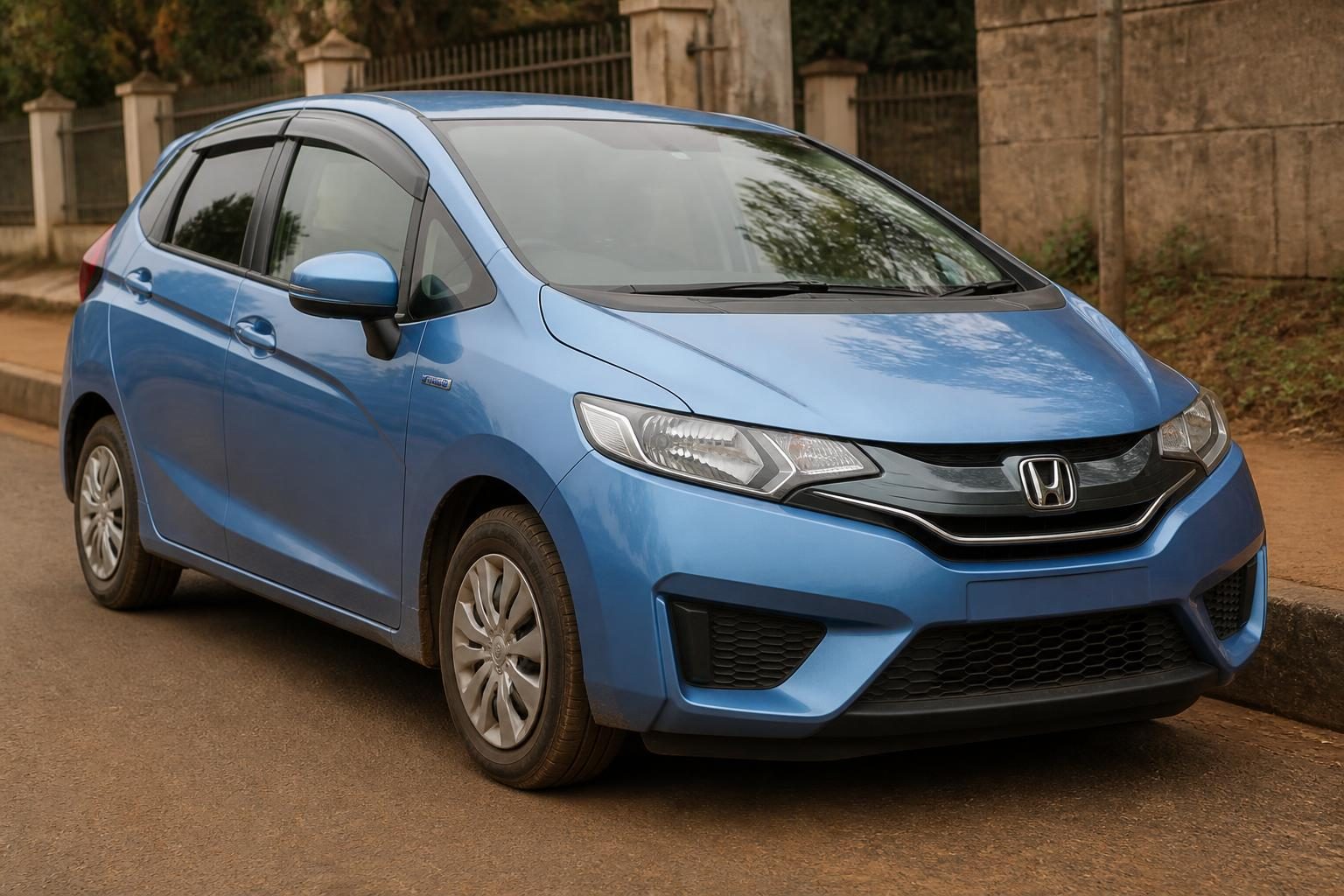 2015 Honda Fit Hybrid
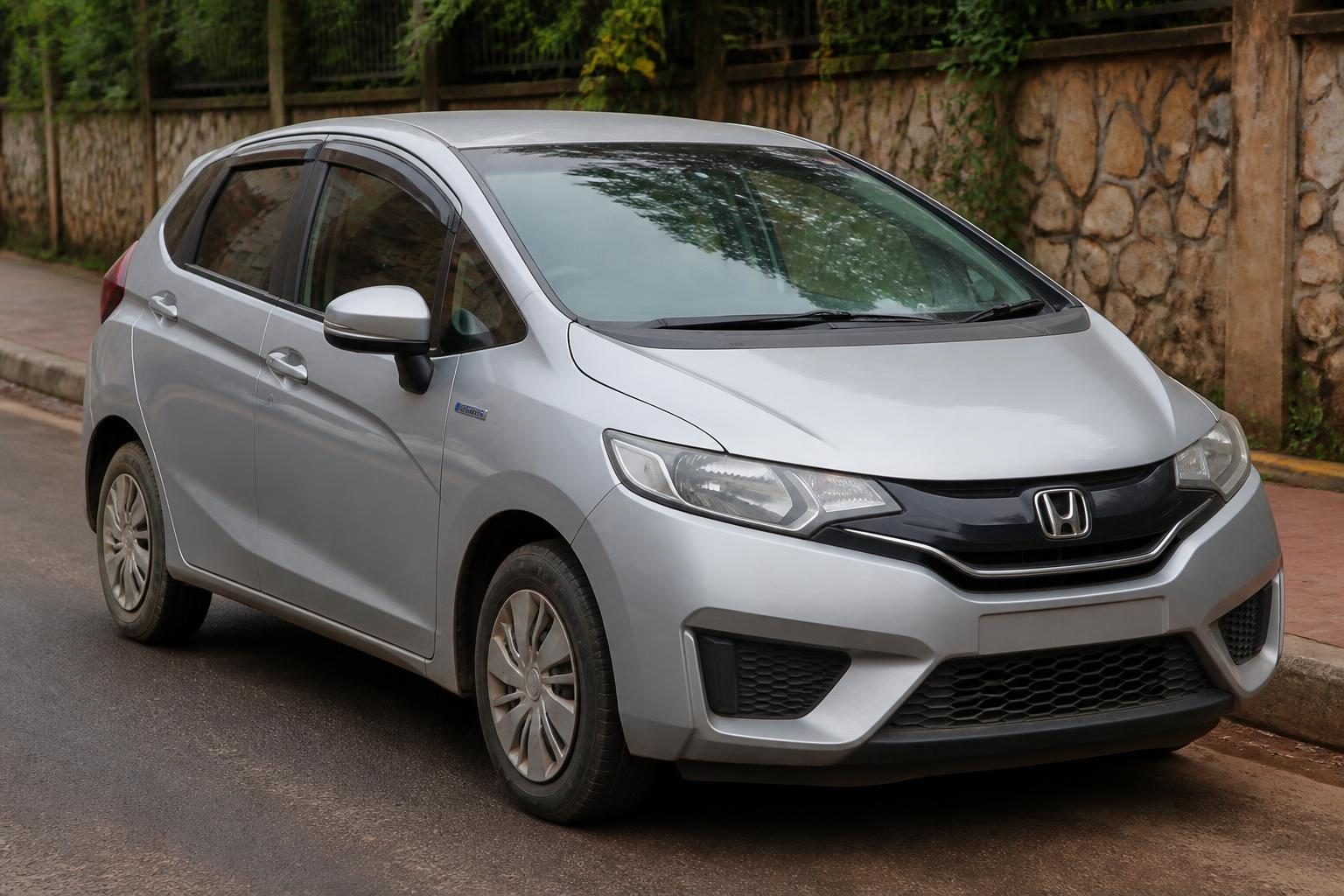 2015 Honda Fit Hybrid
The Honda Fit model page is the relevant place to begin comparing this compact hatchback. The 2015 Honda Fit Hybrid uses a 1,500cc hybrid system, with 52,700 kilometres, front-wheel drive and five seats. Its compact body and flexible cabin suit city buyers.
The fetched 2015 Honda Fit vehicle record lists 110 horsepower and an LEB engine code. Confirm the exact model code from Japanese specification documents before comparing it with the Aqua, especially if you want a non-Toyota option.
Nissan Note Hybrid
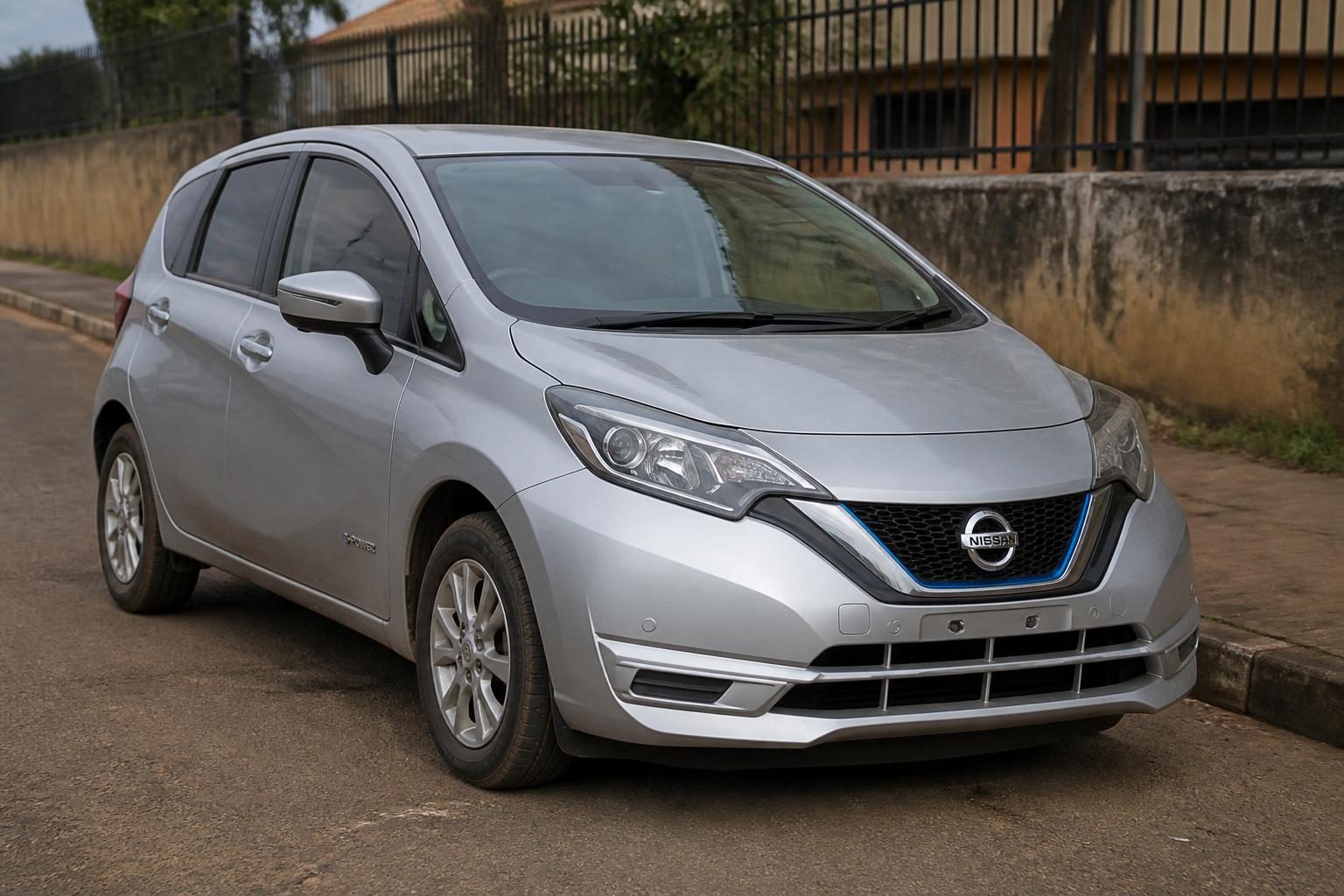 2017 Nissan Note Hybrid
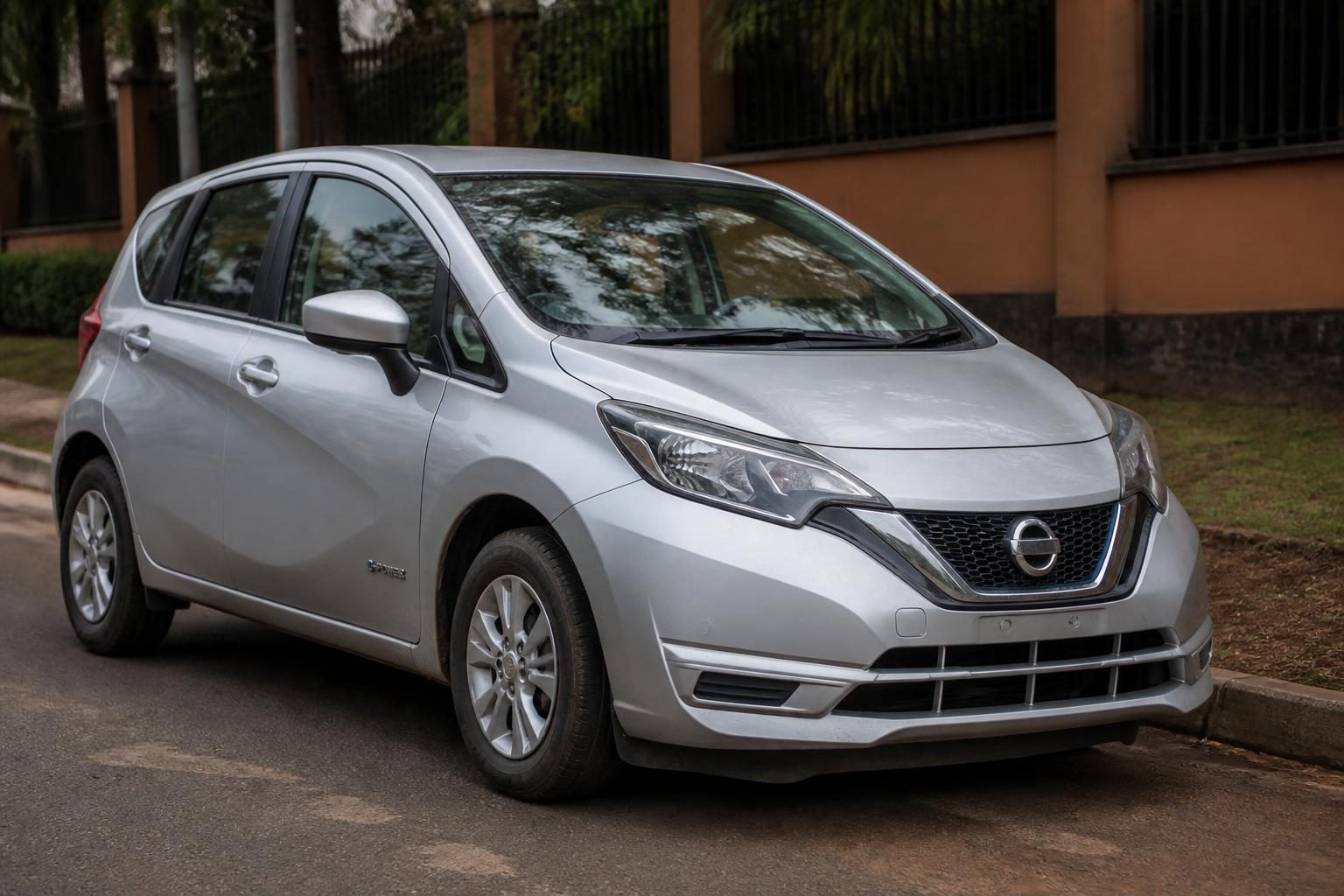 2017 Nissan Note Hybrid
The 2017 Nissan Note Hybrid is listed as a hybrid with 79,000 kilometres, automatic transmission and 2WD. The fetched page does not establish e-Power or engine capacity, so confirm the powertrain from a Japanese Nissan or auction record before treating it as an urban hybrid comparison.
Its grade 3.5 means the auction sheet and inspection notes deserve close attention (2017 Nissan Note vehicle page, 2026). Confirm the e-Power system, battery evidence, parts support and exact URA classification before comparing it with an Aqua.
Suzuki Swift
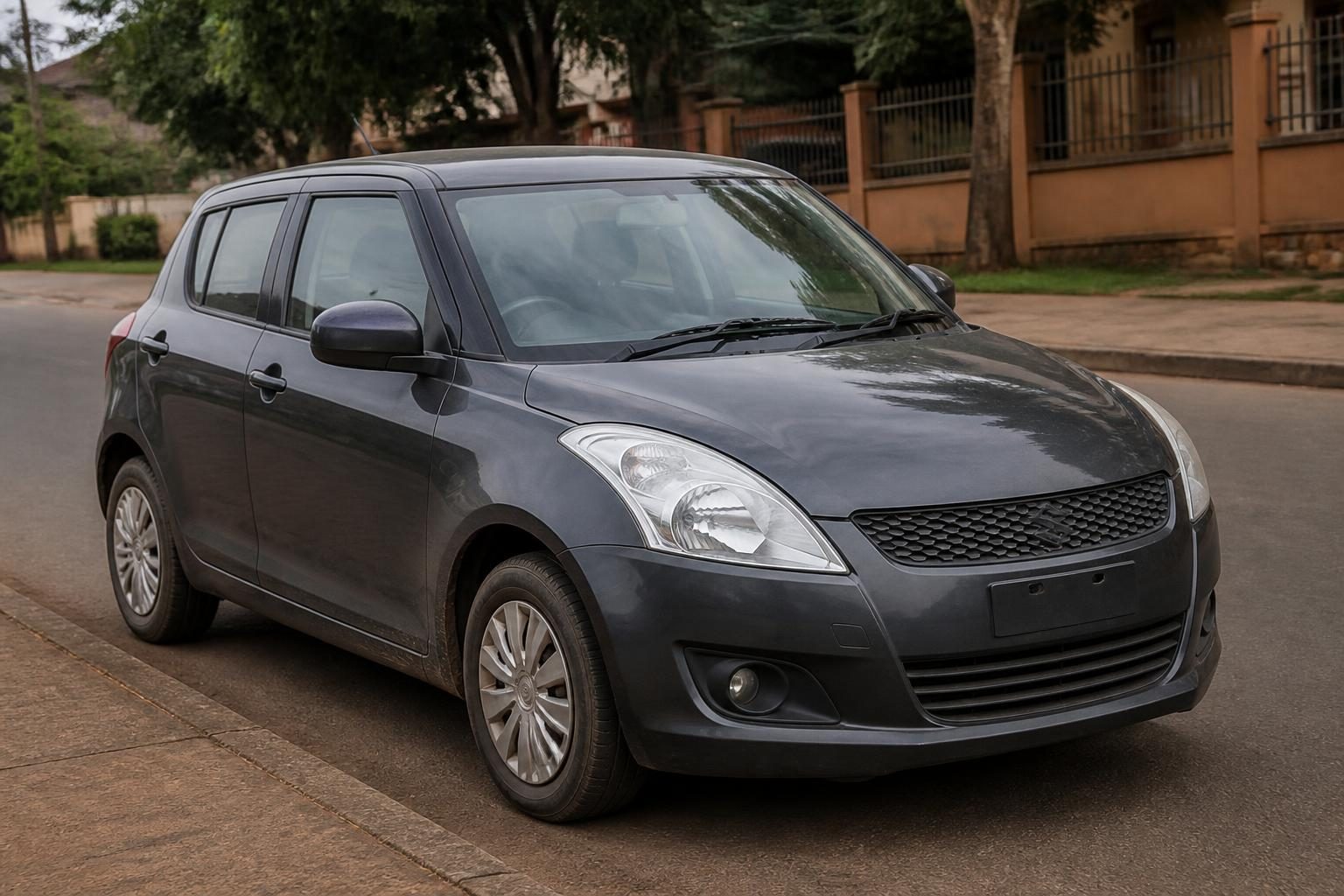 2015 Suzuki Swift
The 2015 Suzuki Swift is listed as a petrol hatchback with 40,520 kilometres, automatic transmission, 2WD and grade 3.5. Confirm the engine capacity from the vehicle documentation before using it in a valuation comparison. It is easy to position as a simple city-car comparator.
A petrol hatchback may appeal to buyers who prefer straightforward ownership. However, compare its fuel use over a Kampala commute with the complete landed estimate for a hybrid before deciding.
Toyota Prius Hybrid
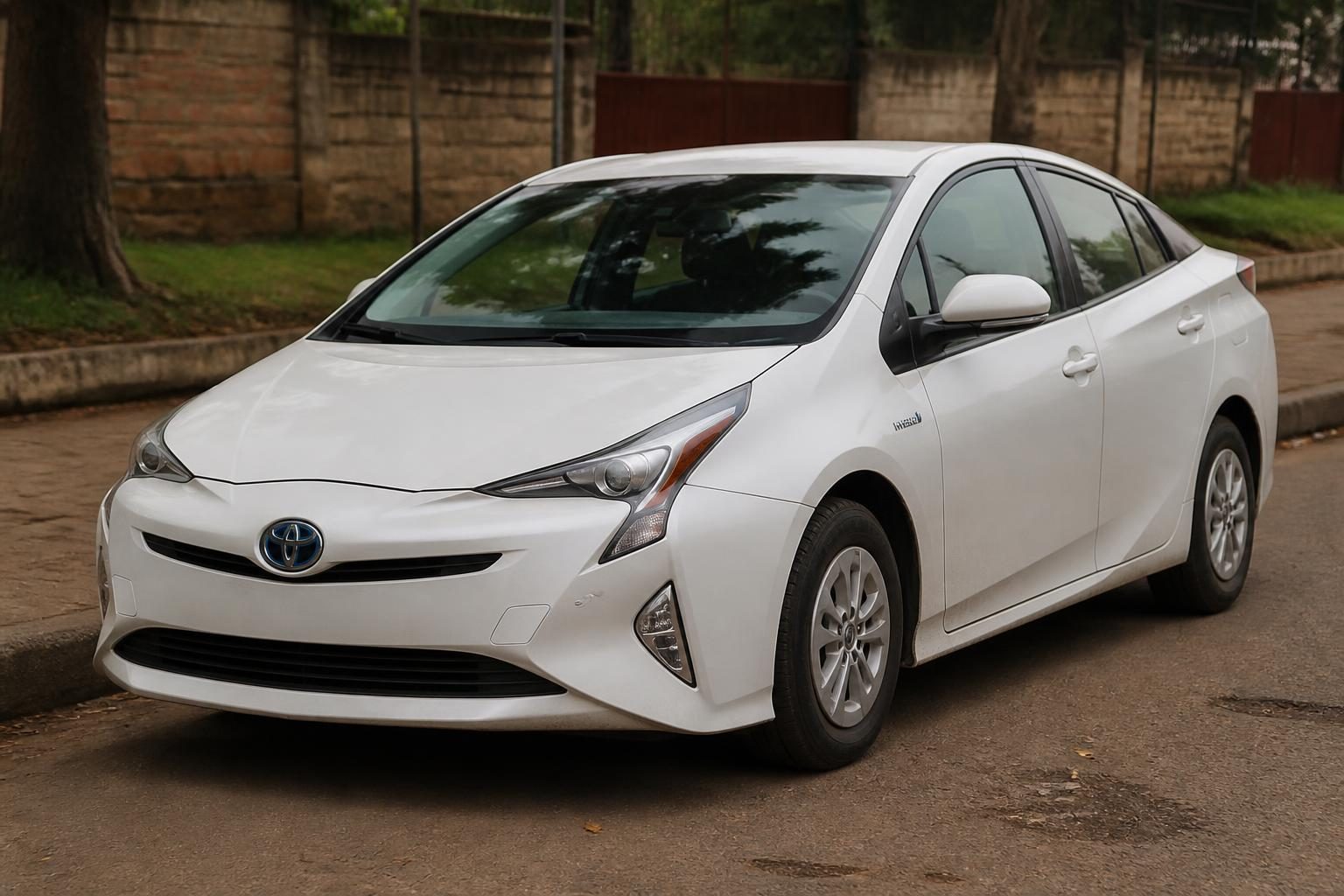 2016 Toyota Prius
The 2016 Toyota Prius uses an 1,800cc hybrid system and has five seats, front-wheel drive, 130,000 kilometres and grade 4. It offers more cabin space than the Aqua.
The 2016 Toyota Prius vehicle page lists 98 horsepower and a 2ZR-FXE engine code (2026). Its higher odometer reading makes battery evidence, inspection comments and service history especially important.
Toyota RAV4
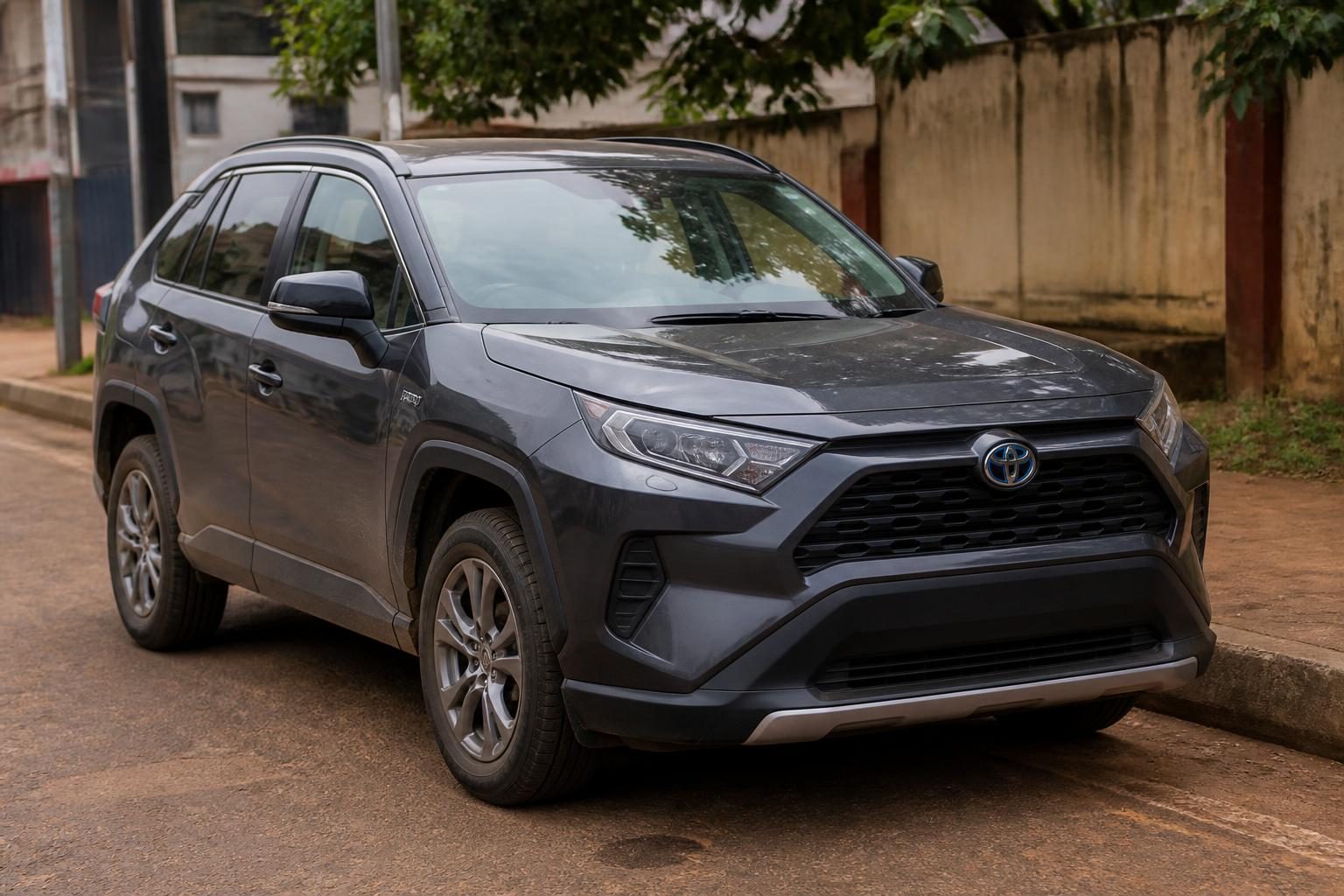 2020 Toyota RAV4
The 2020 Toyota RAV4 example is listed as a petrol 4WD vehicle with 88,428 kilometres and grade 4. The supplied page does not establish a PHV designation or 2,500cc engine, so confirm the final powertrain record from the auction sheet or manufacturer documentation.
This is a family and clearance choice rather than an obvious Kampala economy choice. Its larger body and engine can raise purchase, valuation and running-cost exposure.
Toyota C-HR
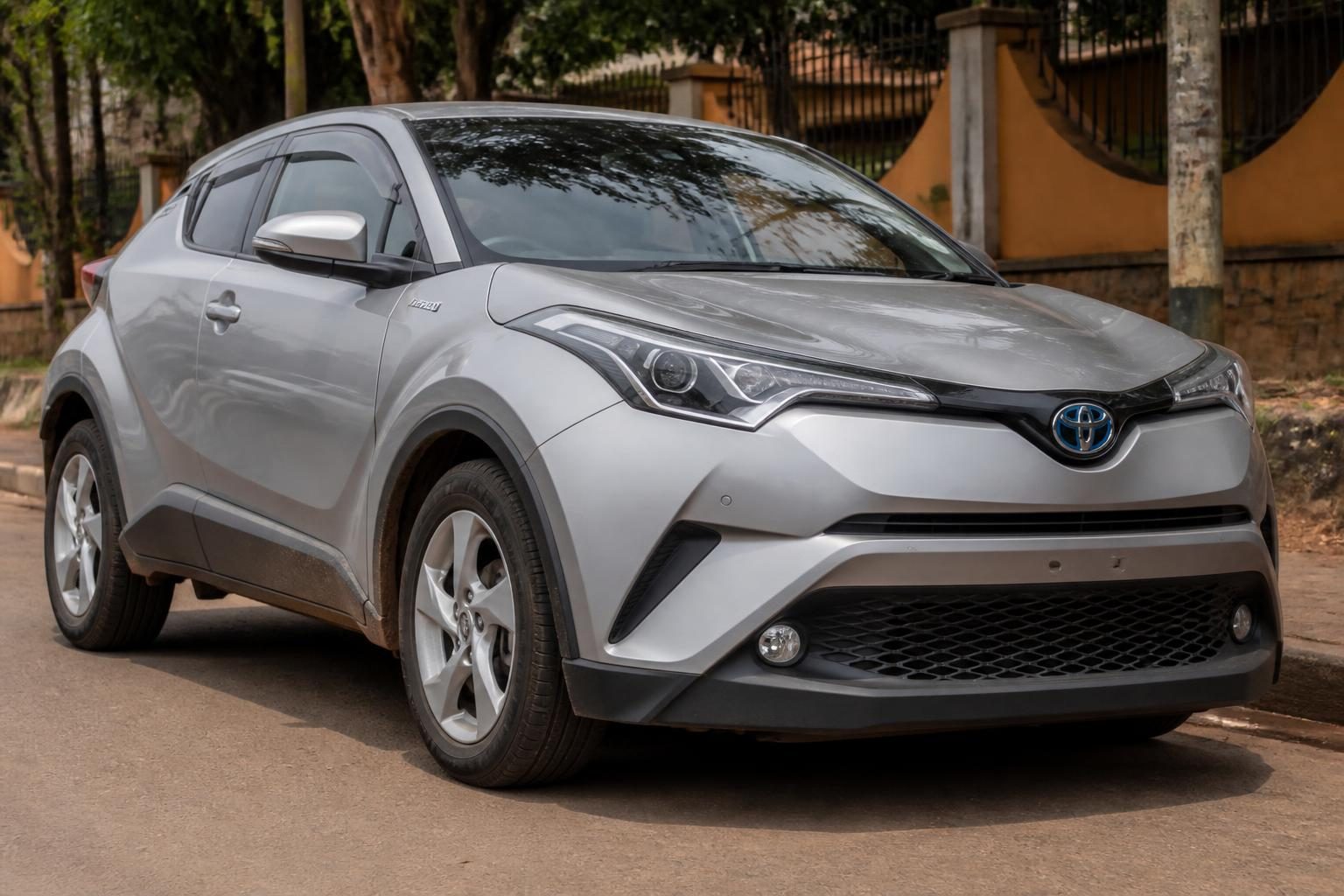 2018 Toyota C-HR
The 2018 Toyota C-HR is listed as a hybrid crossover with 68,000 kilometres, 2WD and grade 4.5. Confirm the engine capacity and exact variant before comparing it with a hatchback or larger SUV.
It suits buyers who want crossover styling and hybrid running potential. Those prioritising rear-seat space, low purchase exposure or rough-road ability should compare other models first.
Subaru Forester
 2016 Subaru Forester
The 2016 Subaru Forester is listed as a petrol 2WD example with 93,000 kilometres and grade 4. The page does not establish the 2,000cc or X-BRAKE specification, so confirm the engine and variant against the auction sheet and chassis record.
Its strengths are ground clearance, cabin space and mixed-road usefulness. It is less convincing for a buyer whose main target is low fuel spending in stop-start Kampala traffic.
Why might a small hybrid beat a cheaper petrol car?
A small hybrid can offer stronger ownership value in heavy traffic when its age, battery evidence, URA classification and purchase bracket all work together. Toyota’s official catalogue lists up to 34.3 km/L for newer Aqua versions, while Prado figures range from 8.3 to 11.2 km/L WLTC depending on version (Toyota Aqua catalogue; Toyota Prado fuel information, 2026). These figures use different vehicles and must not be treated as a direct promise of real-world consumption.
A hybrid may make better ownership sense when its age, battery evidence, URA classification and purchase bracket all work together. It is not automatically cheaper. A petrol Swift can still suit a buyer who values simplicity, while an Aqua may suit someone driving through heavy Kampala traffic every day.
When comparing similar vehicle pages, the useful question is not which car has the lowest headline price. It is which one leaves the fewest unanswered questions about age, condition, classification and running costs.
Which vehicles may offer weaker value for some buyers?
Larger petrol vehicles may offer weaker value for buyers focused mainly on fuel spending and urban commuting. Toyota’s Prado fuel information shows a WLTC range of 8.3 to 11.2 km/L across later versions (Toyota Prado fuel information, 2026). That does not make a Prado a poor vehicle. It means the buyer should need its clearance, space or rural ability before accepting its higher running-cost exposure.
Older vehicles close to the working 15-year import limit also leave less room for delays or rule changes. Parliamentary tracking shows that a 2026 proposal sought to reduce the threshold from 15 years to 13 years, but it was withdrawn and should not be treated as current law (Parliament Watch bill tracker, 2026).
Use Uganda’s import-rules and regulations page as a starting point, but verify the current requirements with URA and UNBS before payment because online guidance can change. The exact year of manufacture matters.
How should you check a vehicle before payment?
The exact vehicle record should be your starting point because URA’s valuation guidance identifies matching fields including make, model, frame, body, engine capacity, year, fuel and drive (URA Frequently Asked Customs Valuation Questions, 2026). That makes the vehicle record more useful than a generic online tax estimate.
Use this checklist:
- Confirm the year of manufacture.
- Match the make, model and frame description.
- Confirm engine capacity, fuel, body type and drive.
- Find the closest entry in the August 2026 URA database.
- Review the Japanese auction sheet.
- Review the independent inspection report.
- Confirm the current UNBS pre-export inspection and Certificate of Roadworthiness requirements.
- Review the vehicle page’s Estimated landed cost panel.
- Keep a separate allowance for clearance and registration.
- Compare two or three models for the same use.
The how-to-buy guide, shipping schedule and car specifications database can help you organise those checks.
How can a vehicle page support a landed-value comparison?
A vehicle page supports a landed-value comparison by bringing together vehicle-specific evidence, including inspection records, auction grade and an Estimated landed cost panel. For example, the 2016 Toyota Aqua vehicle page shows two inspection reports, an auction grade and an Estimated landed cost panel (2026).
Carbarn lists vehicles in Japan, provides the official Japanese auction sheet and in-house inspection report before payment, and arranges EAA pre-shipment certification before export.
It ships by RoRo to Mombasa or Dar es Salaam. Onward transport depends on the route and shipment. Its dashboard provides invoices, inspection records, certificates, bill of lading documents and live vessel tracking.
Weekly sailings are available. Allow about 6 to 10 weeks from purchase to delivery, depending on purchase processing, vessel schedules, port clearance and inland delivery. The listed price covers the vehicle, shipping and inspection, but duty, VAT, port clearance and registration remain separate. (Carbarn how-to-buy guide, 2026)
Model fit by driving need
The best choice depends on how the vehicle’s URA classification, age, engine, inspection evidence and daily use fit together, not on a single model label (URA Motor vehicle Value Guide, 2026).
| If your priority is… | Start by comparing… |
|---|---|
| Kampala fuel economy | Aqua, Corolla Hybrid, Fielder and Note |
| A small city car | Aqua, Fit Hybrid and Swift |
| A smaller starting budget | Swift, Fit, Aqua and older Note examples |
| Family and cargo space | Corolla Touring, Fielder and Prius |
| Compact SUV shape | C-HR or RAV4 |
| Lower engine-size exposure | Swift, Note or Aqua |
| Rough roads and clearance | Forester or a suitable larger SUV |
| Lower uncertainty | A newer, well-inspected vehicle with an exact URA match |
The strongest landed-value choice is not necessarily the lowest auction price. It is the vehicle whose classification, age, inspection evidence, fuel use and intended purpose all line up. You can compare vehicle specifications before shortlisting.
Frequently Asked Questions (FAQs)

Related Cars


Jason Sildir
Passionate Automotive Blogger
I am a Turkish-Australian automotive writer with a passion for hybrid vehicles and rugged 4WD adventures. My writing combines detailed technical insights with a love for outdoor exploration and Aussie driving culture. Having guest posted for leading automotive sites, my mission is to educate and inspire drivers considering greener and tougher vehicle options.

Published Date
September 10, 2026