A sedan can look affordable on paper, then become costly because of fuel use, difficult parts or weak resale demand. Kampala traffic adds another test. So do speed bumps, air-conditioning use and regular journeys to Jinja, Mbarara or Mbale.
The right choice depends on more than the badge. This comparison weighs comfort, official Japanese fuel figures, inspection evidence, maintenance familiarity and likely buyer demand. It also separates true sedans from Corolla hatchbacks and wagons, which many online lists mix together.
Quick Answer
- Toyota Corolla: a strong all-round option when familiarity, practical running costs and Carbarn’s resale indicator matter.
- Honda Civic: a balanced option with a more modern cabin and driving feel.
- Toyota Camry: the comfort-first choice, with a spacious hybrid sedan format.
- Honda Accord: roomy and refined, but condition and variant matter more.
- Toyota’s 2022 Corolla Axio Hybrid specification lists 27.8 km/L WLTC. The 22.0 km/L JC08 figure in the same table applies to a petrol/CVT variant, not the hybrid. These are test-cycle figures, so they do not promise the same result in Kampala.
What makes a used sedan good value in Uganda?
The 2026 AutoMag Uganda guide to used cars for durability and value discusses popularity, condition and parts access when considering ownership value. For a sedan buyer, those are useful checks alongside comfort, fuel demand, repair support and inspection evidence. The guide does not provide a measured Uganda-wide demand study.
Comfort means supportive seats, effective air-conditioning, useful rear-seat room and a ride that copes with urban bumps. Boot space matters too, especially when the car handles family shopping and upcountry luggage.
Official fuel figures need careful reading. Japanese manufacturers use testing cycles such as JC08 and WLTC. They are useful benchmarks, but traffic, tyre pressure, road conditions and driving style change the result.
Resale is a market judgement, not a promise. Age, mileage, body condition, service records, accident history and inspection documents can matter as much as the badge.
Is the Toyota Corolla a practical option?
For many buyers, the Toyota Corolla range for Uganda is a sensible starting point. The 25 August 2026 Toyota Corolla Price in Uganda | Japan Stock snapshot gives the model 5/5 for resale and 5/5 for parts and service. These are Carbarn guidance indicators, not independent Uganda-wide market statistics.
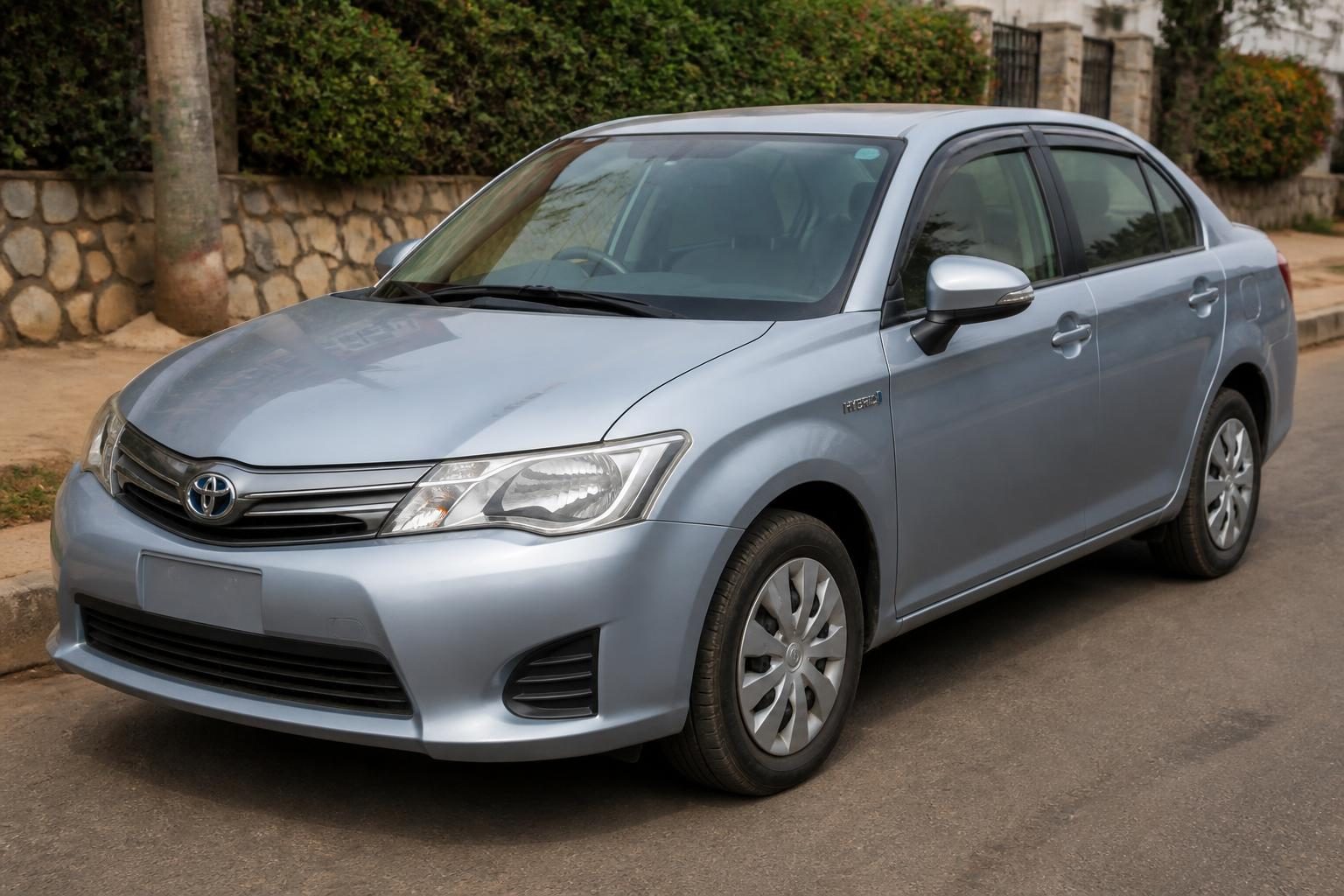 2015 Toyota Corolla
The supplied 2015 AXIO G example records a hybrid powertrain, 1,490 cc engine, NKE165 model code, automatic CVT, 2WD, five seats, 23,000 km and auction grade 4. However, the August 2026 snapshot classifies that record as a wagon. The 2018 and 2022 Corolla examples include a hatchback, a wagon and an SUV, so those specifications should not represent a Corolla sedan.
That distinction matters. The examples above should not be used as evidence for a sedan-specific recommendation. If you choose a sedan-bodied Corolla or Axio, confirm the exact body style, year, trim and hybrid evidence on its vehicle record before comparing it with the sedans below.
For more model-specific background, read our Toyota Corolla Axio guide. Treat the Axio as a compact alternative, then confirm its exact body style, year and hybrid evidence before buying.
Is the Honda Civic a balanced modern option?
The Honda Civic listings in Uganda suit buyers who want a compact sedan and a newer-feeling cabin. In the 2017 Honda Civic in Uganda listing record, the car has a 1,500 cc petrol engine, CVT, 93,000 km, sedan body and auction grade 4.
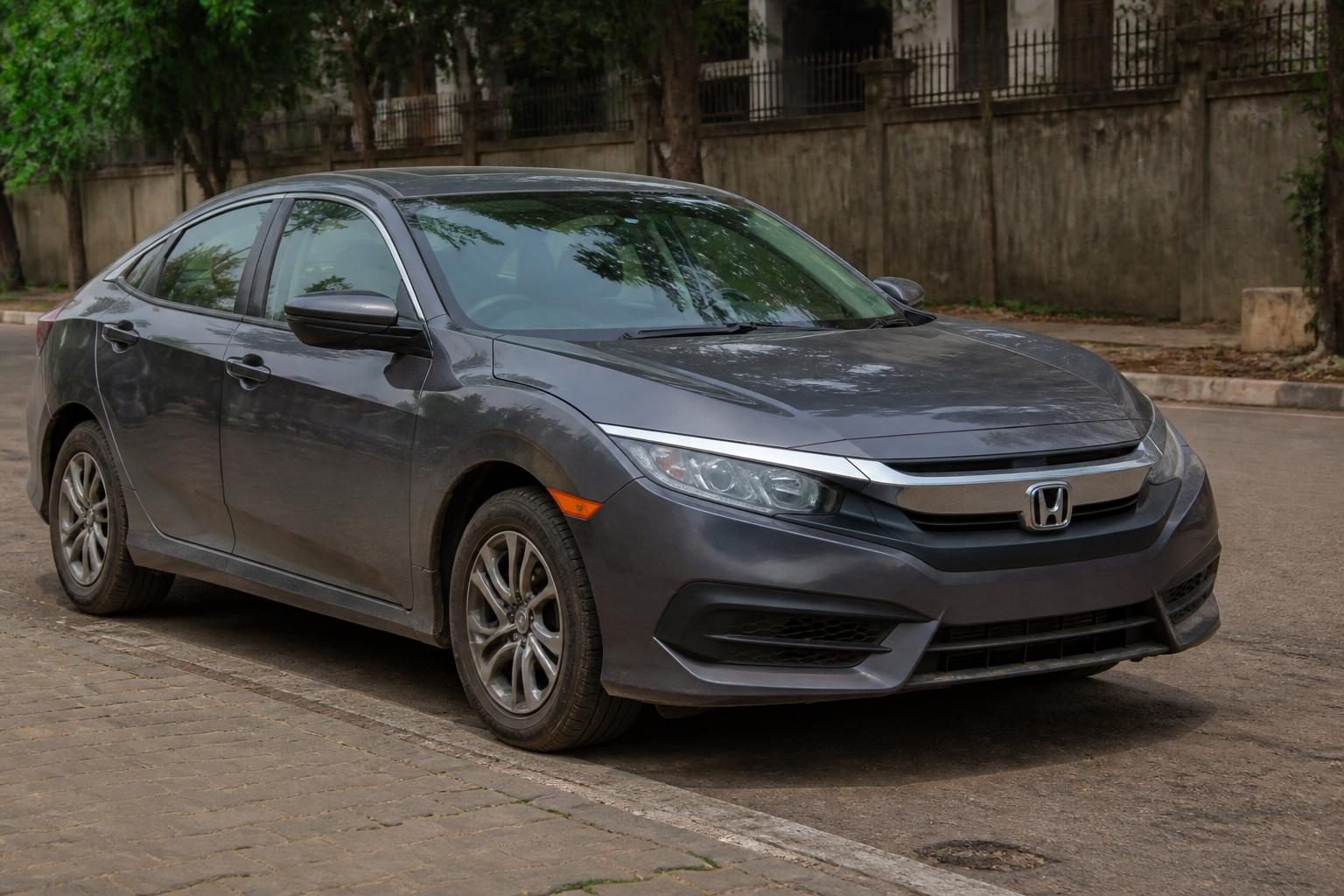 2017 Honda Civic
The confirmed FC1 specification includes front-wheel drive, five seats, Honda Sensing equipment, air-conditioning, leather steering controls and a 1,500 cc turbocharged engine. Honda’s official archived 2017 Civic Sedan information lists 19.4 km/L under the JC08 cycle (Honda Japan, Civic Sedan FC1 model information, 2019).
The Civic is a sensible middle ground for a buyer who wants a compact sedan. Check the exact variant, suspension condition and parts support before deciding, because those details can change the ownership picture.
This Civic is a dated stock example, not a reason to assume every 2017 Civic has the same specification. Check the body, turbo system, service history and repair evidence closely.
Toyota Camry, the comfort-first choice
The Toyota Camry options for Uganda make the most sense when cabin space and ride comfort matter more than compact size. In the 2018 Toyota Camry in Uganda listing record, the hybrid sedan has a 2,500 cc engine, 59,484 km, automatic CVT, five seats and auction grade 4.
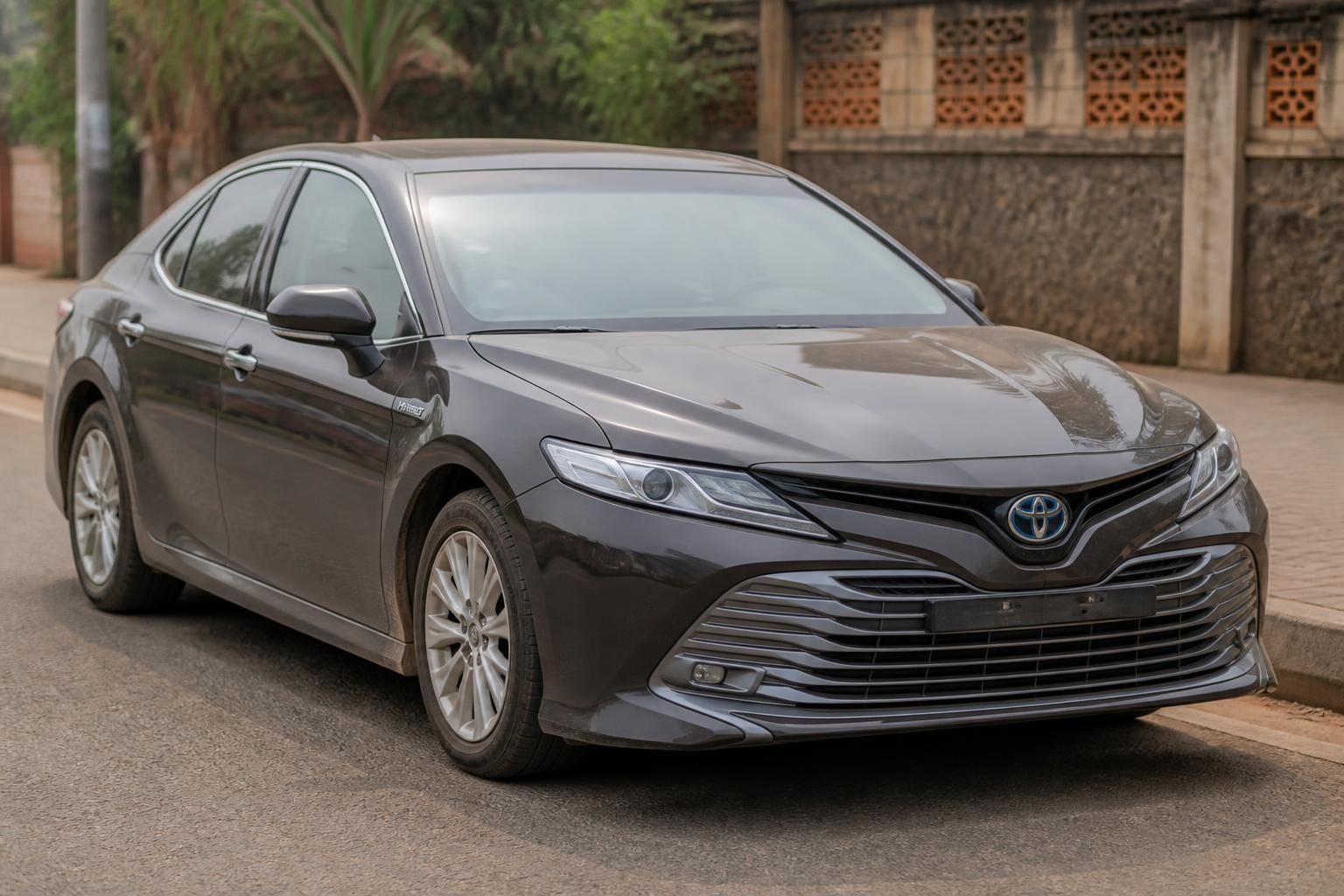 2018 Toyota Camry
The AXVH70 G has a 2,500 cc hybrid system, 2WD and a larger 4,885 mm body. The inspection records a clean underbody, good tyres with around 4 mm tread, a dent on the rear passenger door and light bumper marks. That detail shows why grade alone cannot describe the whole car.
Toyota’s 2018 Camry specification lists 33.4 km/L JC08 for the AXVH70 X grade and 28.4 km/L for heavier grades (Toyota Japan, Camry specification, 2018). Do not attach either number to the G variant without confirming the exact trim.
The Camry may be the comfort-first choice here, based on its larger cabin and sedan format. Tyres, suspension parts and body repairs may deserve a larger budget, so check those costs before choosing it.
Honda Accord, spacious and refined
The Honda Accord vehicles for Uganda suit buyers who value a substantial cabin and calm highway character. In the 2016 Honda Accord in Uganda listing record, the Hybrid EX Black Leather has a 2,000 cc engine, CR7 model code, CVT, 119,300 km and auction grade 3.5.
 2016 Honda Accord
The five-seat sedan has front-wheel drive, leather interior features, electric front seating and a 60-litre tank. Its inspection records show a clean underbody and 3 mm tyre tread, but also a cracked windscreen and rear bumper marks.
Honda’s archived official data lists 30.0 km/L JC08 for the Hybrid EX (Honda Japan, Accord Hybrid specification, 2020). Confirm that the black-leather variant matches the tested EX specification before using that figure for comparison.
The Accord offers generous cabin space for buyers who value that feature. However, its higher mileage and grade 3.5 make inspection evidence especially important. Treat the Corolla’s 5/5 resale score as Carbarn guidance, not proof of the widest resale market.
Which sedan fits your use and ownership priorities?
In the 25 August 2026 model snapshots, the Corolla scores 5/5 for resale and parts support, while the Camry scores 4/5 for both. Those indicators support the basic choice, but they do not replace checking the individual vehicle’s age, condition and documentation.
| Buyer priority |
Recommended model |
Why |
| Resale familiarity to investigate |
Toyota Corolla |
Familiar size and a 5/5 Carbarn resale indicator |
| Kampala-focused running costs |
Corolla Axio or small-engine Civic |
Compact dimensions and potentially lower fuel demand |
| Most comfort and space |
Toyota Camry |
Larger cabin and relaxed hybrid sedan character |
| Highway-oriented family use |
Honda Accord |
Spacious interior and stable long-distance manners |
| More modern driving feel |
Honda Civic |
Contemporary cabin, compact size and balanced road manners |
These are editorial recommendations, not official ratings. A grade 4 vehicle with clear records may make more sense than a newer car with uncertain repairs. Compare the year of manufacture, odometer, auction grade, body style, service evidence, tyre condition and hybrid-system information.
What should you check before importing a sedan?
In 2026, the Uganda Revenue Authority Import and Export FAQs state that the Used Motor Vehicle Valuation Database supports customs valuation. Use the current Ugandan import rules to check a sedan’s year of manufacture and eligibility before treating it as a normal import recommendation.
Read both the Japanese auction sheet and the post-purchase inspection report. Confirm the exact engine, trim, transmission and body style. Then use the vehicle page’s estimated landed-cost panel. The vehicle price is not the final confirmed on-road figure: the panel estimates customs duty, VAT, environmental levy, WHT and infrastructure charges, UNBS inspection, registration and plates. Confirm final figures and any clearance charges separately.
How should you compare a Japan-sourced sedan before buying?
In the 2026 How to Buy a Japanese Car from Japan guide, buyers receive two inspection reports before payment, plus shipment documents and dashboard tracking. That evidence gives you a better basis for comparison than a model name or a single fuel figure.
Check whether the vehicle is right-hand drive, within Uganda’s age limit and suited to your roads. Look for underbody condition, tyre tread, windscreen damage, air-conditioning performance and repair notes. A clean auction grade still needs to be read alongside the detailed comments.
[UNIQUE INSIGHT] In practical terms, resale should be judged by more than Toyota branding. Familiar parts, mechanic knowledge, sensible age, body condition and inspection proof are useful factors to compare, but this article does not establish which combination produces the strongest resale outcome.
A useful buying exercise is to compare cabin space, hybrid evidence and the likely cost of Uganda-side charges before choosing the lowest purchase bracket. A cheaper sedan is not always the cheaper ownership decision.
The short answer is simple: choose the Corolla for broad balance, the Civic for a modern compact feel, the Camry for comfort and the Accord for spacious highway use. For fuel-conscious comparisons, see fuel-efficient cars under 20M UGX.
A Japan-sourced route can be handled through Carbarn’s Japan-sourced sedan buying process, which provides the Japanese auction sheet and in-house inspection report before payment, and lists Japan stock. The buying guide describes EAA pre-shipment certification and RoRo shipping to Mombasa or Dar es Salaam; Mombasa shipments then continue by road to Uganda. Buyers can use the dashboard for invoices, inspection reports, bill of lading, EAA documents and vessel tracking. Allow about 6 to 10 weeks from purchase confirmation to delivery, as an estimate rather than a promise. Vehicle pages also show an estimated landed-cost panel. It includes estimated customs duty, VAT, environmental levy, WHT and infrastructure charges, UNBS inspection, registration and plates, while final figures and any clearance charges should be confirmed. See how the buying process works.


