How many used cars actually leave Japan for Uganda? For January to September 2026, Japan Customs counted 24,039 used cars that left Japan with Uganda as the final destination. The figure comes from the Trade Statistics of Japan, published through the e-Stat portal, and it was checked on 16 November 2026.
It's an official number, but easy to misread. This post sets out the headline figures, explains how Japan counts them, shows where the volume sat across the year, and is plain about what the data can't tell you when you're shopping for a car.
Quick Answer
- Japan Customs, via e-Stat, counted 24,039 used cars leaving Japan with Uganda as the final destination in Jan–Sep 2026.
- The same months of 2025 showed 23,492, so the rise of 2.3% is modest.
- Petrol cars of 1,500–2,000 cc made up 13,454 of them, or 56%.
- March 2026 was the top month at 3,549.
- The count covers exports by declared destination. It is not arrivals, clearances, registrations or what Ugandans bought.
- The 2026 figures are as published on 29 October 2026 and may be revised later.
What did Japan count in January–September 2026?
Japan Customs recorded 24,039 used passenger cars leaving Japan with Uganda as the final destination between January and September 2026. The same nine months of 2025 produced 23,492. Full-year 2025 closed at 31,610. These figures sit in table 26-17 of the Trade Statistics of Japan on e-Stat, pulled on 29 October 2026 and checked on 16 November 2026.
| What Japan Customs counted |
Period |
Figure |
| Used cars, Uganda as final destination |
Jan–Sep 2026 |
24,039 |
| Used cars, Uganda as final destination |
Jan–Sep 2025 |
23,492 |
| Used cars, Uganda as final destination |
Full year 2025 |
31,610 |
| Petrol, 1,500–2,000 cc, Uganda as final destination |
Jan–Sep 2026 |
13,454 (56%) |
| Top single month |
March 2026 |
3,549 |
Source: Japan Customs, Trade Statistics of Japan, via e-Stat. 2026 figures as published 29 October 2026. The 2025 figures are from Japan Customs' fixed 2025 release.
The 2026 total works out to 547 more cars than the same months of 2025. Spread across nine months, it works out to an average of about 2,670 cars a month. The full-year 2025 figure, set against its first nine months, implies an Oct–Dec 2025 total of 8,118, though that is a derived number rather than one Japan Customs publishes on its own.
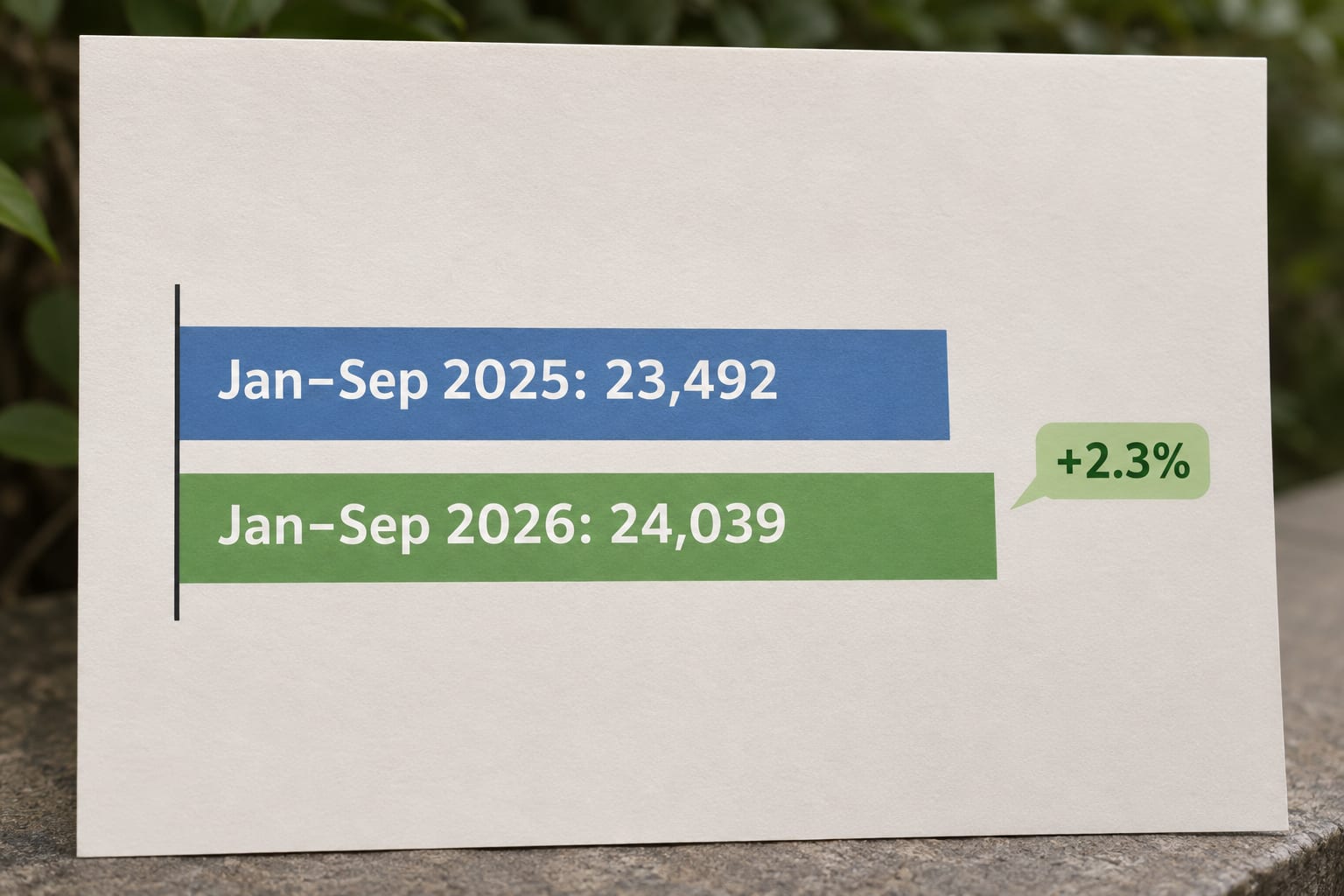 Illustration: Jan–Sep 2025 against Jan–Sep 2026, Japan Customs via e-Stat.
The petrol figure needs careful reading. Japan Customs splits used cars by fuel type and engine size, and nothing else. So 13,454 means petrol cars with engines between 1,500 and 2,000 cc, full stop. The table doesn't name models, body styles or brands, and hybrids are classified separately from spark-ignition-only petrol cars under the Harmonised System. If the fuel question matters to you as a buyer, our separate guide to petrol, diesel and hybrid cars in Uganda covers the running-cost side.
How does the count work, and what can't it tell you?
Japan Customs builds its export statistics from the export declarations filed with it, and it assigns each car to the final destination written on that declaration. Its own guide, About Trade Statistics of Japan, sets this out. So the 24,039 figure counts cars that left Japan declared for Uganda, not cars that arrived, cleared or were registered there.
"Final destination" is worth a plain-language gloss. Uganda is landlocked, so a car bound for a Ugandan buyer will usually pass through a coastal port in a neighbouring country first. The customs count follows the destination the exporter declared, not the port where the ship unloads. That's the principle behind the statistic. It isn't a measured fact about where each of these 24,039 cars physically went.
That principle also sets the limits. The figure is not:
- a count of arrivals in Uganda
- a count of cars cleared by the Uganda Revenue Authority (URA)
- a count of registrations
- a count of what Ugandans bought in those months
Two more points of scope. The table covers 16 used-vehicle codes under HS 8703, which is the heading for passenger cars in the Harmonised System that customs offices use worldwide. Goods vehicles (HS 8704) and vehicles carrying 10 or more people (HS 8702) are counted elsewhere. And the 2026 figures are as published on 29 October 2026. Japan Customs issues provisional, revised and fixed releases, so the 2026 numbers can still move.
Where did the volume sit, and what comes next?
March 2026 was the top month, with 3,549 used cars leaving Japan for Uganda. That works out to about 15% of the nine-month total in a single month. The data doesn't say why March ran high, so we won't guess.
For scale, the same table shows 54,427 used cars leaving Japan for Kenya over the same months. That's a little over twice Uganda's figure. South Sudan shows 10. These are scale markers only. The table doesn't explain the gap between countries, and we're not drawing conclusions about any of them.
The October data is scheduled for release on 27 November 2026, according to the Japan Customs release calendar. The calendar describes itself as provisional, and dates can change. We'll revisit this post when the new figures land.
If you're reading this as a buyer, be clear about what the table can't tell you:
- Price. The count has no values attached.
- Brand or model. Only fuel type and engine size are recorded.
- Auction grade or condition. Customs doesn't see the auction sheet.
- What a car costs to land. Duty, clearance and registration happen in Uganda, outside this dataset.
Where can you browse the same kind of cars?
Carbarn lists reconditioned Japanese cars for buyers in Uganda. Each listing shows two inspection reports before you pay: the official Japanese auction sheet and an in-house Carbarn inspector report with photos and defect comments. Cars go through a pre-shipment inspection before they leave Japan, ship RoRo to Mombasa or Dar es Salaam, and then continue by road to Uganda.
The listed price covers the vehicle, shipping and inspection. It does not cover import duty, VAT, port clearance or registration, which you pay in Uganda.
You can browse all used cars for Uganda, or start with a brand page for Toyota, Nissan, Honda or Suzuki. The cars on those pages are Carbarn's own listings and are not part of the Japan Customs dataset above.